
The automobiles introduced by Ader for the 1904 season represented an important stage in the technical development of the French manufacturer. Previously associated with its distinctive balanced engines, whose cylinders were arranged at an angle, the company was now expanding its range with more conventional two- and four-cylinder power units. This development became apparent at the Paris Motor Show of 1903, where Ader exhibited new chassis intended for the following year. The revised models combined traditional elements of the firm's engineering practice with improvements in engine construction, ignition, carburation and transmission.
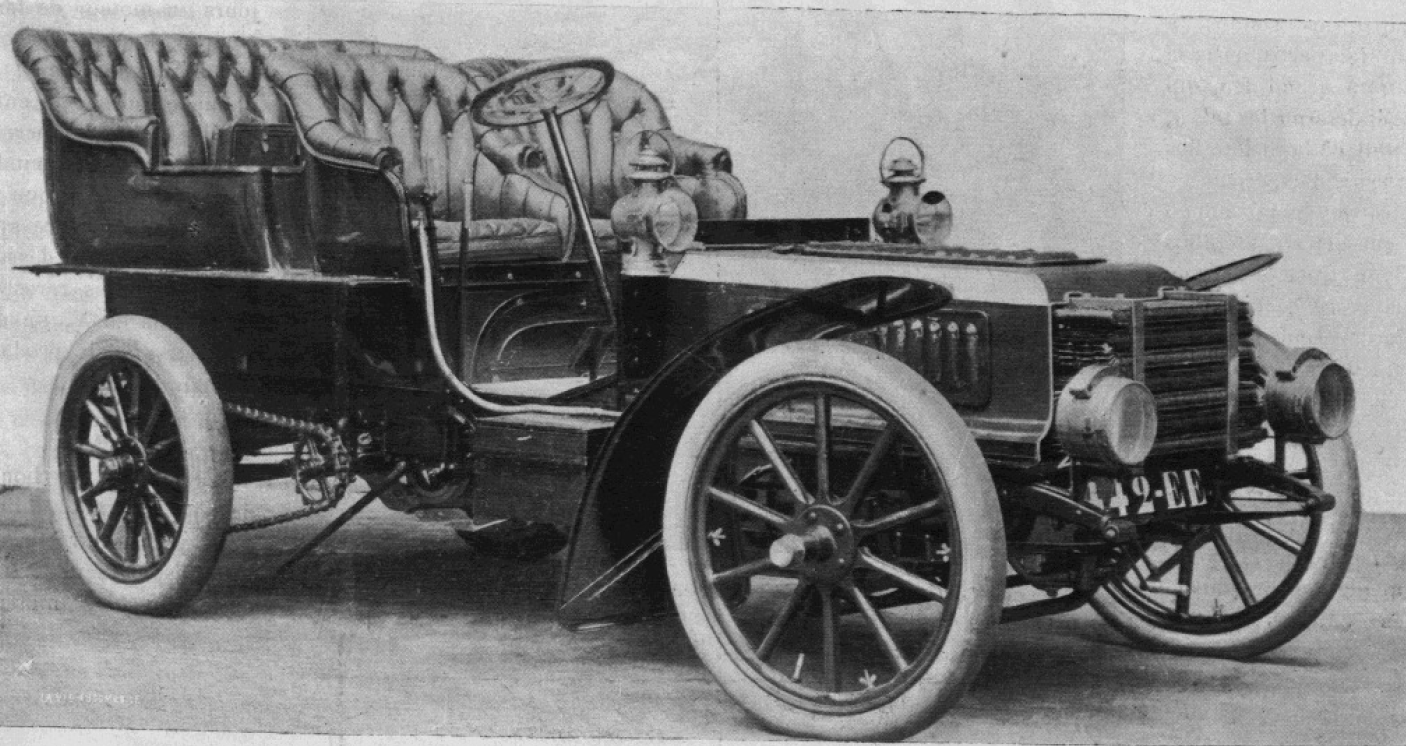
The Ader Range for 1904
Reporting on the Paris exhibition in January 1904, the British Automotor Journal described the introduction of two new Ader models, equipped respectively with two- and four-cylinder engines having vertically arranged cylinders. Both were represented by chassis at the exhibition. At the same time, the manufacturer continued to offer its characteristic balanced engines with inclined cylinders, incorporating further improvements in their valve mechanisms. The simultaneous availability of these different engine arrangements illustrates a transitional moment in Ader's development, as the company sought to preserve its distinctive engineering solutions while adopting increasingly conventional automobile construction.
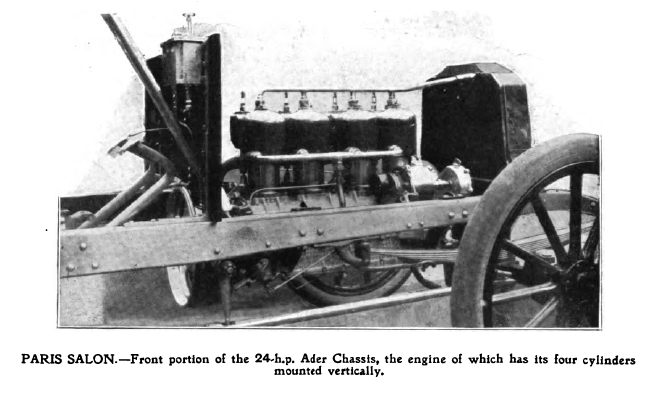
Vertical-Cylinder and Balanced Engines
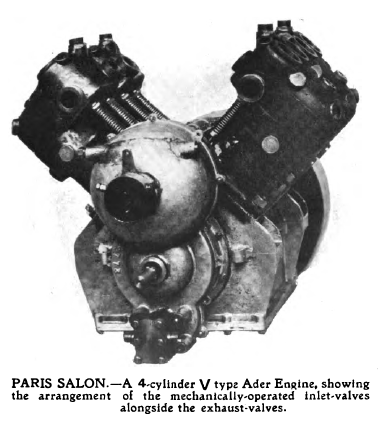
The new vertical engines were rated at 12 and 24 horsepower, corresponding to the two- and four-cylinder models. According to the contemporary British description, both employed cylinders with a bore of 100 mm and a stroke of 110 mm. These dimensions give calculated displacements of approximately 1.73 litres for the two-cylinder engine and 3.46 litres for the four-cylinder version. Each cylinder was manufactured as a separate casting, a constructional arrangement that facilitated the production and servicing of individual cylinders. The mechanically operated inlet valves were positioned on the same side of the cylinders as the exhaust valves, producing a compact valve arrangement and allowing positive control of valve timing.
The adoption of mechanically operated inlet valves was particularly significant at a time when many automobile engines still relied upon automatic inlet valves opened by atmospheric pressure during the induction stroke. Positive mechanical operation permitted the opening and closing of the valves to be controlled by the valve gear rather than by variations in cylinder pressure. Ader extended this improvement to its established inclined-cylinder engines, demonstrating that the older balanced-engine design remained under active development rather than being immediately superseded by the new vertical types.
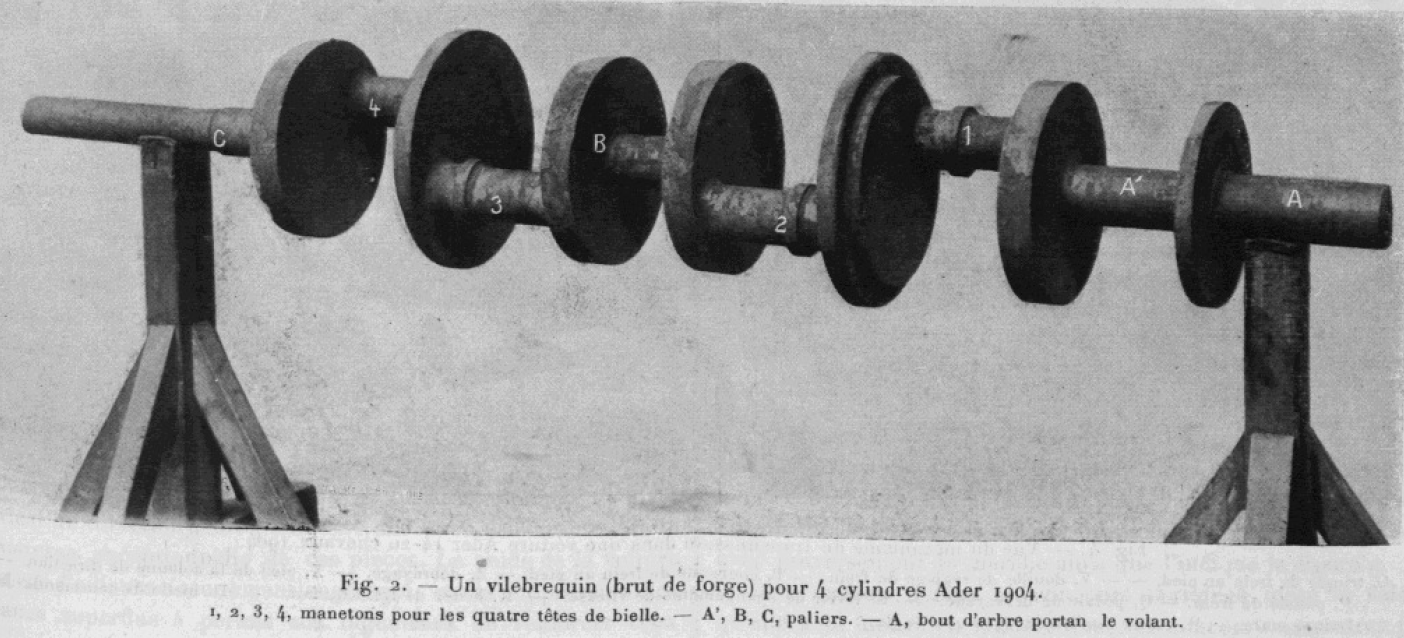
A particularly valuable record of the company's engine construction appeared in the French journal La Vie Automobile in June 1904. Among the illustrations was a photograph of an unfinished forged crankshaft intended for a four-cylinder Ader engine. The four crankpins and the bearing portions of the shaft were clearly identified, providing a rare view of the component before its final machining. Such illustrations are especially informative because they reveal manufacturing details that were normally concealed once the engine was assembled.
Ignition, Carburation and Engine Equipment
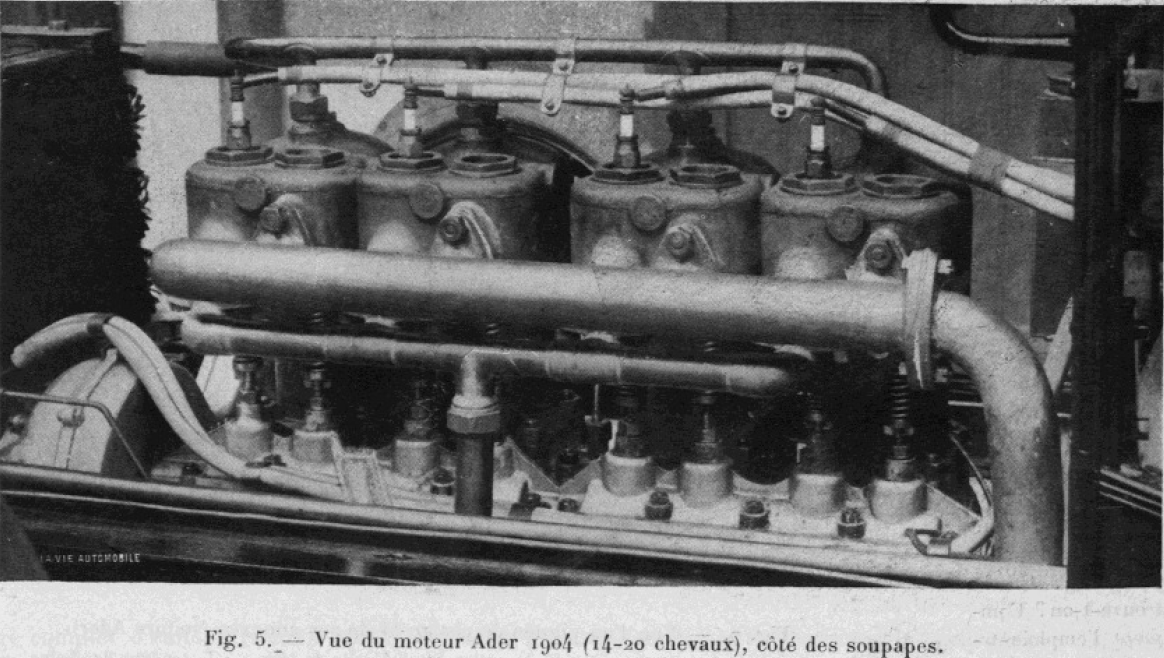
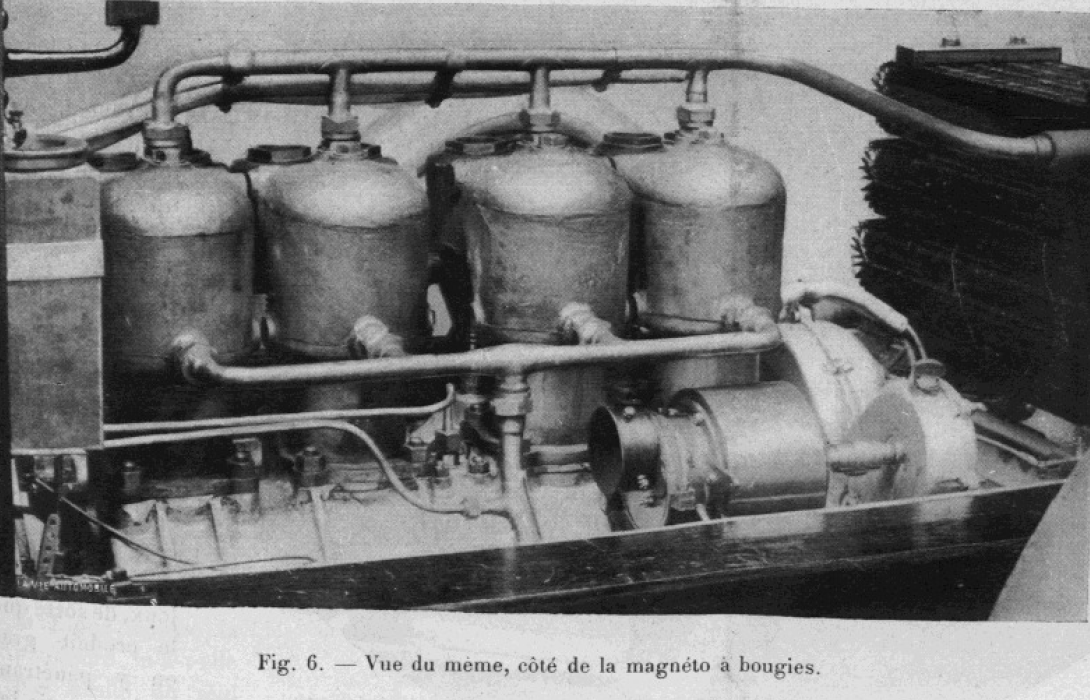
The improvements introduced for 1904 also included changes to the ignition and fuel-supply systems. High-tension sparking plugs were fitted into inspection covers above the inlet valves, with electrical current supplied by a Basse-Michel magneto. In place of the wick-type carburettor previously associated with Ader engines, the company adopted the Crouan automatic carburettor. This represented an important development in fuel preparation and regulation, replacing the earlier method of vaporising petrol with a carburettor intended to supply the combustible mixture under varying operating conditions.
The French technical study illustrated the four-cylinder engine fitted to the Ader 14–20 chevaux model, photographing it from both sides. One view shows the valve side of the engine, with the cylinder-head assemblies and associated pipework clearly visible. The opposite view records the ignition side, including the magneto and sparking-plug arrangements. These photographs complement the British description by showing how the individual components were assembled and positioned within the engine compartment. The French designation of 14–20 chevaux should not automatically be treated as identical to the 24-hp model mentioned in the earlier British report, since the contemporary sources employ different model classifications.
Chassis Construction
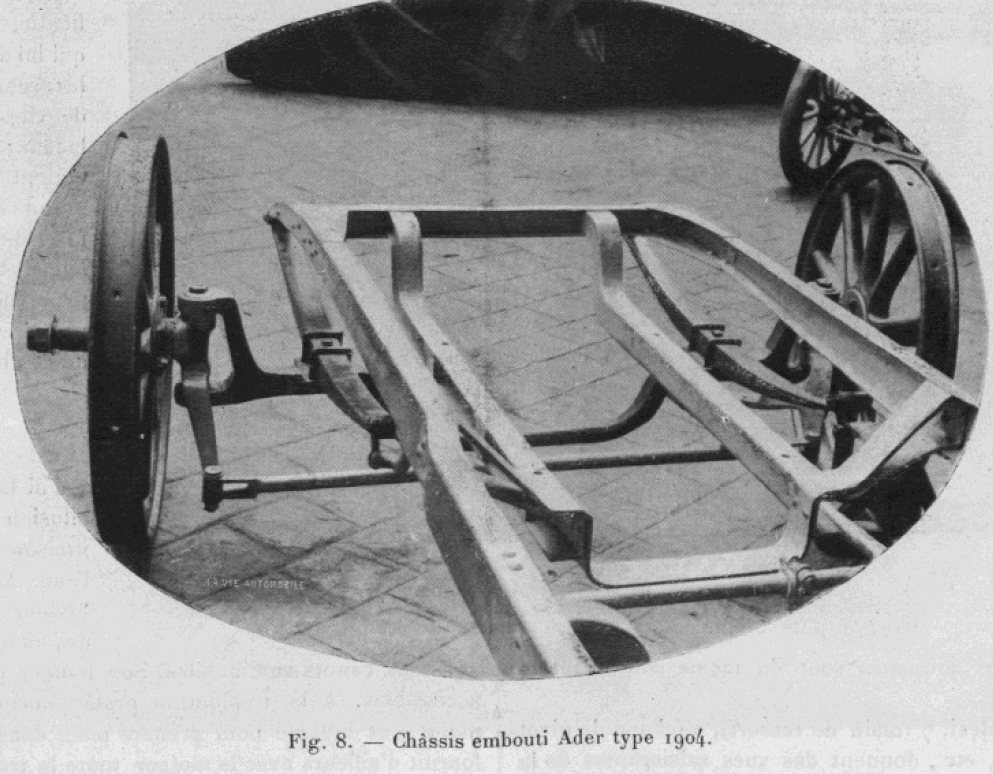
The chassis of the 1904 Ader automobiles reflected the different requirements of the smaller and larger models. According to The Automotor Journal, the 12-hp chassis employed a tubular frame, whereas the more powerful 24-hp model was provided with a pressed-steel frame. The adoption of pressed steel was consistent with the wider development of automobile chassis construction during the opening years of the twentieth century, when manufacturers increasingly sought stronger and more rigid foundations for their engines, transmissions and coachwork. The pressed members and cross-bracing could be arranged to accommodate the mechanical units while providing the structural support required by a substantial touring automobile.
The contemporary French photograph of the pressed-steel Ader chassis is particularly revealing. It shows the principal longitudinal members, transverse connections and the relationship between the frame and rear axle assembly. Viewed without the engine or bodywork, the structure demonstrates the degree to which chassis design had developed beyond the comparatively simple tubular frameworks employed on many early motor vehicles. The photograph also makes clear that Ader treated the frame as an integrated mechanical structure, rather than merely as a support for the body.
Clutch, Gearbox and Transmission
Power from the engine was transmitted through a cone clutch to a separate gearbox. Flexible couplings were incorporated between the clutch and gearbox, while the gearbox itself was mounted on three points. This arrangement was intended to reduce the effects of relative movement between the mechanical assemblies as the chassis flexed during operation. Three-point mounting was particularly appropriate for automobiles of this period, when road surfaces were frequently uneven and the relatively long frames could experience appreciable distortion.
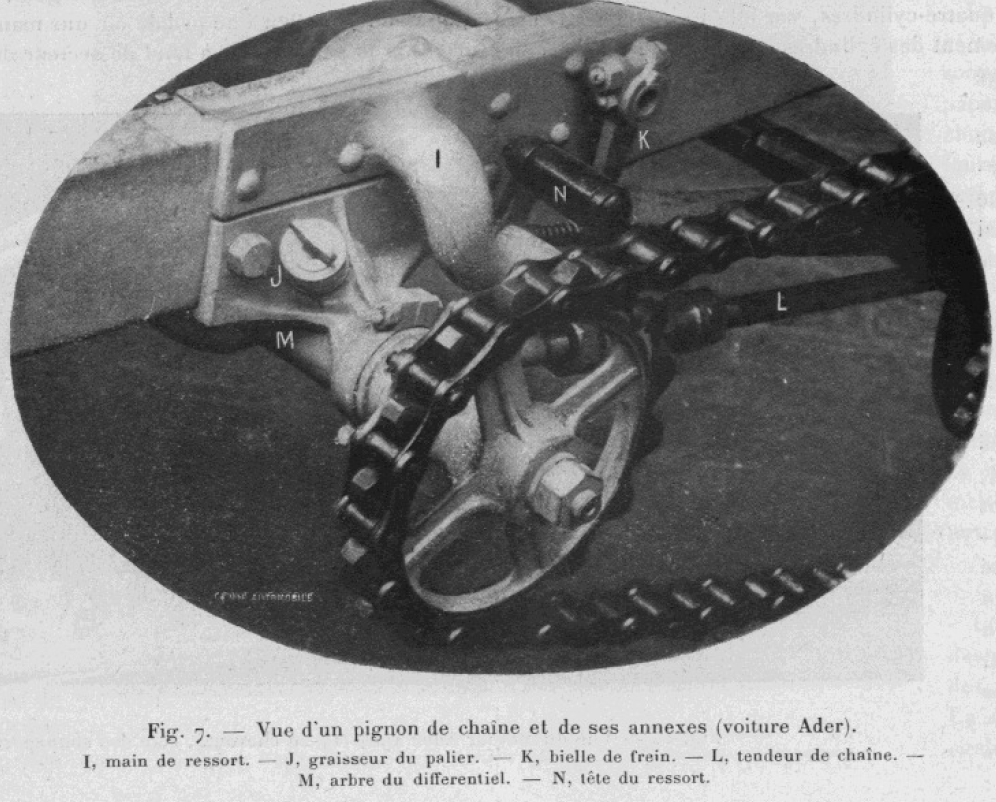
From the gearbox, the drive was transmitted directly to the differential countershaft. Two lateral chains then carried the power to the rear wheels, an arrangement widely employed on substantial French touring cars of the period. The ends of the differential countershaft were equipped with ring lubricators, providing lubrication for the rotating bearings. Although shaft drive was already gaining acceptance among several manufacturers, side-chain transmission remained an established and practical solution for vehicles requiring a robust means of transmitting considerable engine torque.
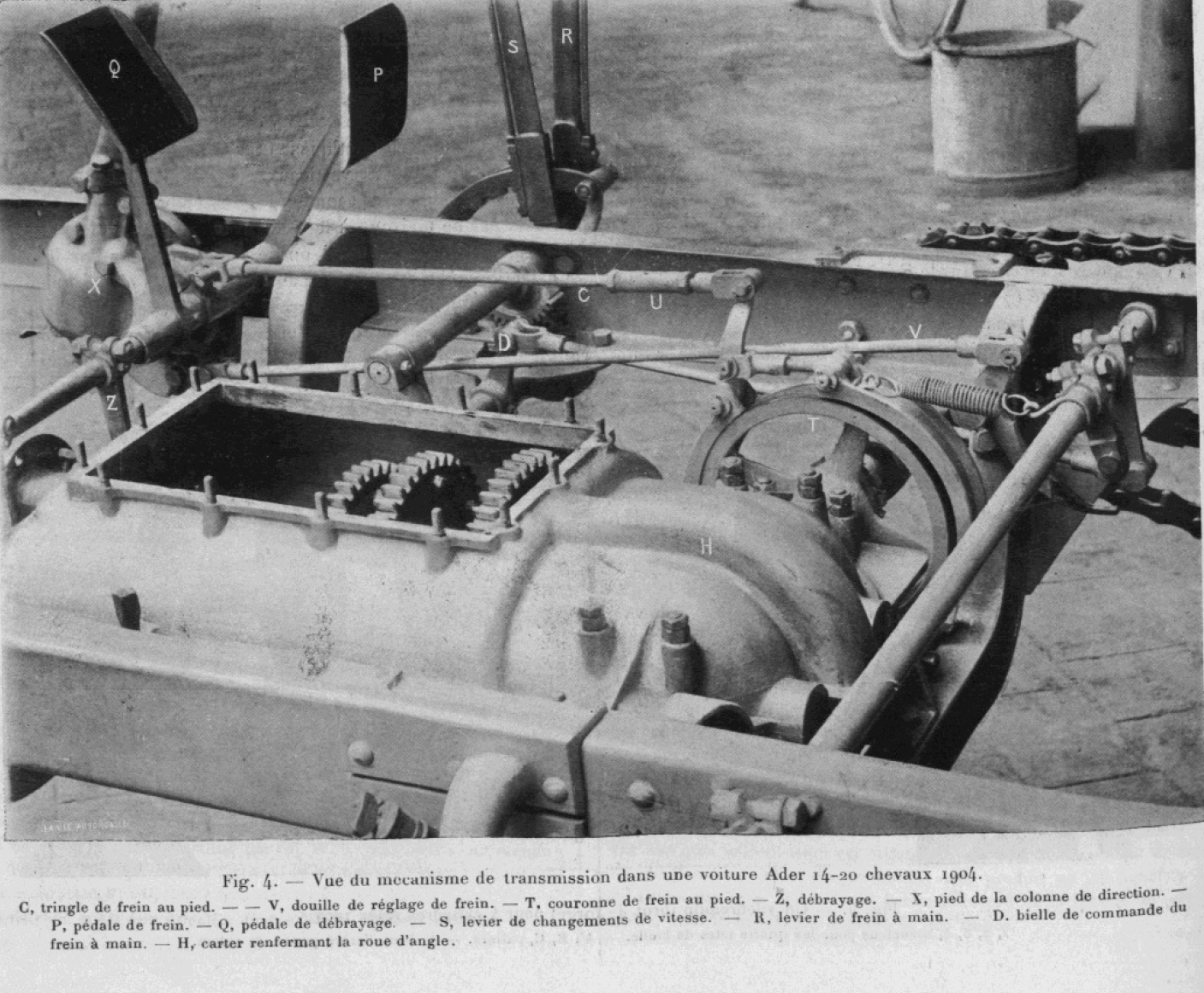
The detailed illustration of the transmission published in La Vie Automobile provides a useful record of the mechanical layout. The gearbox, change-speed lever, handbrake, clutch and brake connections are visible within the chassis. The operating rods and their associated linkages illustrate the complexity of the control system, in which the driver's movements were transmitted mechanically to the appropriate components. A second photograph shows one of the chain sprockets and its associated equipment, including the chain-tensioning arrangement and its connection with the differential shaft.
Steering and Driver Controls
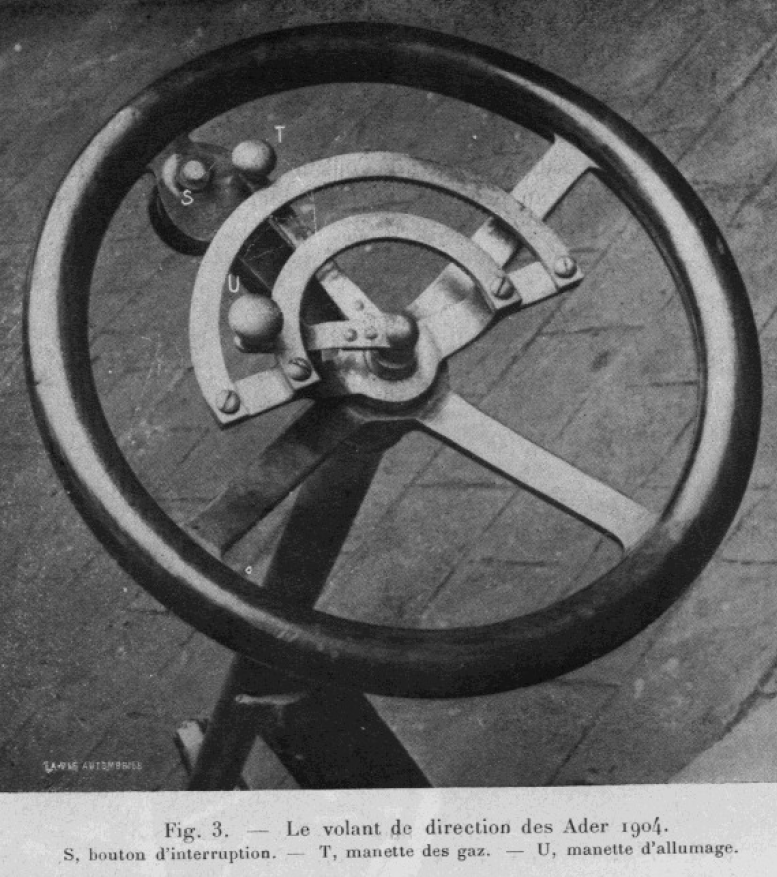
The steering wheel of the 1904 Ader also incorporated controls for regulating engine operation. The illustration published in La Vie Automobile identifies separate hand levers for the throttle and ignition timing, together with an electrical interruption button. Such controls were characteristic of the period, when the driver was expected to make frequent adjustments to the engine in response to road conditions, vehicle speed and load. The steering wheel therefore performed a broader function than simply directing the vehicle, combining directional control with essential aspects of engine management.
Ader and the Evolution of Early Automobile Engineering
The Ader automobiles of 1904 illustrate the coexistence of established practices and emerging technical standards during a formative period of motor-car engineering. Their inclined-cylinder balanced engines preserved an original approach to power-unit design, while the new vertical-cylinder models followed the increasingly familiar arrangement adopted by numerous European manufacturers. Mechanically operated inlet valves, magneto ignition, automatic carburation and revised chassis construction demonstrated a continuing process of refinement. At the same time, the separate gearbox, cone clutch and side-chain transmission retained features that had already proved successful in earlier generations of automobiles.
The contemporary descriptions in The Automotor Journal and La Vie Automobile are particularly valuable because they record both the technical specifications and the actual construction of these machines. The surviving photographic illustrations reveal components rarely visible in conventional pictures of completed automobiles: an unfinished crankshaft, the valve and ignition arrangements, the gearbox and brake linkages, the chain-drive mechanism and the pressed-steel chassis. Taken together, they provide an unusually detailed picture of the Ader automobile at a moment when French manufacturers were rapidly refining the mechanical principles of the modern motor car.
Historical Sources
1. The Automotor Journal, Vol. IX, 9 January 1904, p. 42. Contemporary report on the Ader exhibits at the Paris Motor Show, including engines, carburation, ignition, chassis and transmission.
Digitised journal.
2. La Vie Automobile, 4th year, No. 143, 25 June 1904, pp. 409–413, "Les Voitures Ader 1904." Detailed contemporary technical study with photographs of the engines, crankshaft, transmission, steering and chassis.
Digitised volume, Conservatoire numérique des Arts et Métiers (CNAM).