
Arthur Constantin Krebs (1850–1935): Engineer, Inventor and Industrial Leader

Arthur Constantin Krebs belonged to a remarkable generation of engineers whose work extended across several of the great technological transformations of the late nineteenth and early twentieth centuries. During a long career that began in military workshops and culminated in the leadership of one of France’s most important automobile firms, he worked on balloons and powered airships, submarines, electric motors, fire-fighting equipment, motor vehicles, and industrial organization. When Krebs entered Panhard & Levassor after the death of Émile Levassor, he was not beginning a new technical life, but bringing with him more than two decades of demanding scientific and mechanical experience.
Krebs combined mathematical reasoning with an exceptional ability to turn concepts into practical machines. He did not merely improve isolated parts, but repeatedly sought to rethink a technical problem as a whole and to provide a coherent engineering solution. In the history of technology, it is useful to distinguish between innovation and invention. Innovation refines and extends what already exists; invention introduces a fundamentally new way of thinking about a technical problem. Krebs accomplished both. His irreversible steering system represented a major innovation in automobile design, while his automatic carburettor of 1902 amounted to a genuine invention that transformed the regulation of the internal-combustion engine. This dual capacity for both improvement and conceptual breakthrough helps explain his importance in the early history of the motorcar.
Family Background, Education, and Early Technical Interests
Arthur Constantin Krebs was born on 16 November 1850 in Vesoul, France. His family history reflected the military and political upheavals of the previous century. His grandfather, Nikolaus Krebs, originally from Boppard in Germany, had served in Napoleon’s armies and had been seriously wounded during the Russian campaign of 1812. After the family settled in France, its connections remained linked to circles of the former imperial administration. Arthur’s middle name, Constantin, recalled this association with Grand Duke Constantine of Russia.
Mechanical curiosity appeared early. According to family recollections, Krebs once dismantled his mother’s sewing machine in order to construct a miniature steam-powered sawmill. At the age of eleven he was already reading works on physics and mechanics, and was especially impressed by the popular scientific writings of Adolphe Ganot. Technical drawing became one of his preferred modes of thought. Throughout his life he used sketches and carefully executed plans to communicate ideas that might otherwise have required long verbal explanations.
Steam machinery also made a deep impression on the young Krebs. In 1867 he encountered the work of the French engineer Lotz, a prolific patentee in the field of steam technology. This early experience helped awaken an enduring interest in mechanical construction. Although his later fame would rest above all on electricity and internal-combustion engines, the intellectual roots of his engineering imagination were already visible in these youthful encounters with machinery.
Krebs originally prepared to enter the École Polytechnique, but the Franco-Prussian War interrupted his plans. He entered the army in 1870, served as a junior officer, and later completed his military education at Saint-Cyr. Unlike many civilian engineers of his generation, including René Panhard and Émile Levassor, his professional formation took place within a military framework. At the same time, he continued to study mechanics, physics, and engineering independently. The combination of military discipline, scientific experiment, and self-directed technical study would characterize his entire later career.
Military Engineering and the Airship La France
In 1877 Krebs was assigned to work on the military use of balloons. At Chalais-Meudon, near Paris, he helped organize a workshop devoted to the construction of captive balloons, portable hydrogen-generating apparatus, and steam-powered equipment for handling them. His responsibilities reached far beyond the balloon envelope itself. He studied and designed winches, generators, mechanical devices, and supporting systems without which military ballooning could not become practical.
It was during this period that Krebs first established a link with the firm he would later direct. For the workshop at Chalais-Meudon he acquired a two-horsepower Otto four-stroke gas engine built by Périn, Panhard & Cie. This “town-gas” engine was among the most advanced power units of its day, yet its use also demonstrated the serious limitations of contemporary internal-combustion engines, above all their excessive weight.
In 1882, when the French Ministry of War was studying the possibility of a navigable balloon, Krebs attempted to develop an internal-combustion engine that would use as fuel the hydrogen contained in the balloon itself. He later recalled that this work gave him, for the first time, an opportunity to undertake a thorough study of internal-combustion engines. The hydrogen-engine project did not produce a practical propulsion system for the airship, but it proved immensely important for his intellectual development. Long before entering the automobile industry, Krebs was already investigating combustion, engine regulation, power, and weight.
In the end, electric propulsion was chosen. Working closely with Captain Charles Renard, Krebs participated in the design and construction of the dirigible La France. He designed and built an electric motor of about eight horsepower, running at approximately 1,200 revolutions per minute, together with the light mechanical components required for aerial use. The project demanded coordinated work in aerodynamics, structure, propulsion, electrical storage, and steering at a time when each of these fields remained in a very early state of development.
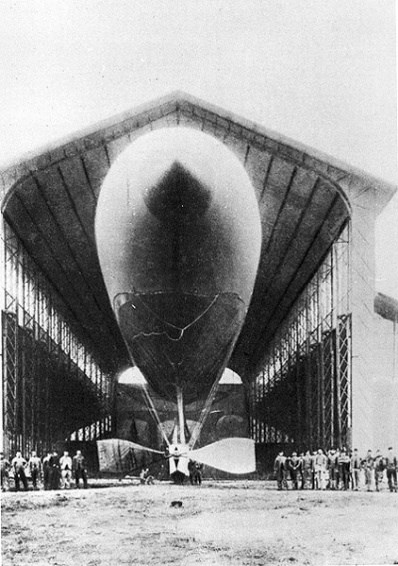
On 9 August 1884, with Krebs at the controls, La France completed a flight of about 7.6 kilometres and returned to its point of departure. This achievement marked one of the great milestones in the history of controlled flight. Unlike an ordinary balloon drifting with the wind, La France demonstrated intentional navigation and a successful return journey. Subsequent flights confirmed the practical significance of the experiment. In 1886 Renard and Krebs jointly received the Ponti Prize of the Académie des Sciences for their progress in aerial navigation.
The significance of La France extended far beyond ballooning itself. The project confirmed Krebs in the conviction that a successful invention required not just a clever idea, but the coordinated design of an entire system. This systems-oriented approach would later shape his work in submarine construction and automobile engineering.
The Submarine Gymnote and the Development of Electrical Engineering
Soon after the success of the airship, Krebs became involved in another pioneering project based on electric propulsion: the experimental submarine Gymnote. Gustave Zédé invited him to help develop the machinery and electrical systems required by the new vessel. Temporarily assigned to naval work, Krebs prepared plans, contacted suppliers, organized manufacture, and supervised the building of the machinery.
He designed an electric motor rated at approximately fifty-two horsepower and weighing about two tonnes. After preliminary trials at Le Havre, Krebs took part in the first tests of Gymnote at Toulon in November 1888. These experiments demonstrated that electric propulsion could make underwater navigation controllable, even if major difficulties remained in observation and orientation.
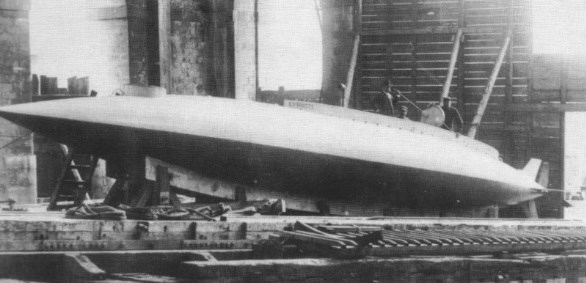
To overcome these difficulties, Krebs worked on optical and gyroscopic devices. Together with Jean Rey, he developed one of the earliest submarine periscopes. He also adapted a gyroscopic system that provided a more stable directional reference than a magnetic compass inside an iron hull. These instruments were not yet the fully developed gyrocompasses of the next century, but they belonged to the important prehistory of underwater navigation. Gymnote remained in service until 1907 as an experimental and training vessel.
Krebs’s work in marine engineering did not stop there. In the 1890s he was active in portable electric motors, naval equipment, and industrial mechanisms. The technical knowledge he acquired in electric machinery, control systems, and materials would later feed directly into several of his automotive inventions—most notably in his use of electrical principles within transmission and valve-control systems.
Reforming the Paris Fire Brigade
From 1884 to 1897 Krebs also served in the Paris Fire Brigade, eventually rising to the rank of chief engineer. Here he united technical design with the administration of a large public service. In order to study the best available methods, he travelled widely—to London, Brussels, Amsterdam, The Hague, Berlin, Saint Petersburg, Moscow, Warsaw, Vienna, and the United States. He examined not only fire pumps and vehicles, but also the broader organization of urban fire protection, including alarms, personnel distribution, communications, and response procedures.
Krebs approached fire-fighting as a complete engineering system. Under his direction, signalling equipment, electrical systems, and ventilation apparatus were improved. In cooperation with the industrialist Durenne, he also designed and built a steam-powered fire pump that combined relatively light weight, economy of operation, and rapid readiness for service. Speed of deployment was one of its essential merits, since in fire-fighting rapid action could be as important as maximum pumping capacity.
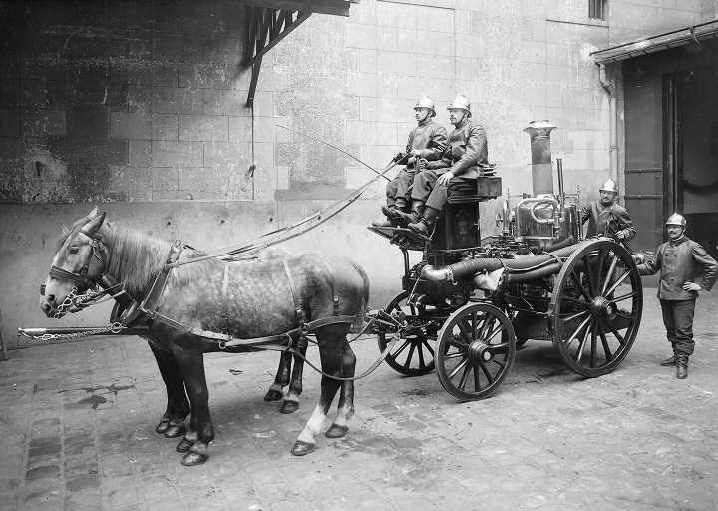
Perhaps most revealing was the way in which Krebs organized the brigade’s workshops. He turned them into what was effectively a small factory, equipped with modern machinery, including a gas engine purchased from Panhard & Levassor, and even a chemical laboratory. The workshops manufactured much of the brigade’s own equipment, including a new motor vehicle designed by Krebs himself. In other words, the Paris Fire Brigade under his technical leadership ceased to be merely a user of machinery and became, in part, a producer of it.
This experience was crucial to his later career. It taught him how to coordinate personnel, production, technical planning, and workshop organization on an institutional scale. For Krebs, good administration and sound engineering were inseparable. That conviction would become a defining feature of his leadership at Panhard & Levassor.
Krebs’s Independent Automobile of 1896
Krebs’s interest in the automobile began before his formal entry into Panhard & Levassor. By the early 1890s he was already studying the use of relatively light petrol engines for road transport. The Paris–Rouen trial of 1894 demonstrated the growing practical promise of the motorcar, while a journey to the United States in 1895 exposed him to American mechanical culture and industrial methods.
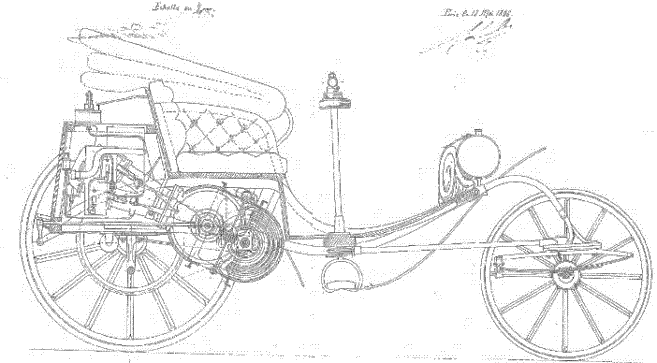
In May 1896 Krebs received French patent FR256344 for a motor vehicle containing several original solutions. Its engine and transmission were mounted on a subframe supported at three points, reducing the influence of chassis distortion on the machinery. The steering geometry was arranged so that the front wheels tended naturally to return toward the straight-ahead position. These features reveal Krebs’s concern for durability, stability, and mechanical refinement.
He was equally concerned with simplicity and safety of operation. The automobile of the late nineteenth century remained a difficult machine, often requiring strength, practice, and technical understanding from the driver. Krebs sought to make operation easier, more intuitive, and safer, especially for newcomers to motoring. This concern helps explain his interest in improved steering and in a new system of gear selection.
Electromagnetic Gear Selection
The most original feature of Krebs’s 1896 automobile was its electromagnetic gear-changing system. Instead of relying exclusively on the direct mechanical engagement of gear teeth, Krebs used electromagnets to select the desired transmission ratio. The driver operated an electrical commutator, while magnetic couplings controlled the transmission of torque. The object was to reduce the shock, effort, and awkwardness associated with early gearboxes.
This solution showed Krebs’s characteristic habit of transferring principles from one field of technology to another. His deep experience with electrical machinery enabled him to apply electrical control to automotive transmission. Although the system did not become the general standard of the day, it anticipated a major theme in later automotive history: the use of electrical systems to simplify mechanical control.
Importantly, this gearbox did not remain a mere curiosity. Krebs later adapted the electromagnetic transmission to Panhard & Levassor chassis, and it continued to be built until 1903. It therefore achieved real industrial use, rather than remaining only an experimental novelty.
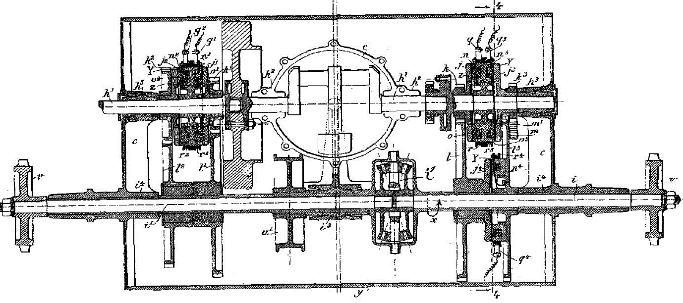
On 3 September 1896 Krebs brought his automobile to the Panhard & Levassor works on avenue d’Ivry in Paris. The vehicle attracted the attention of Émile Levassor, who was especially impressed by the ease of changing gears. Levassor expressed interest in manufacturing the vehicle and acquiring rights to the invention. That encounter marked the beginning of the close relationship between Krebs and the company.
The Successor to Émile Levassor
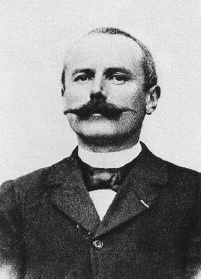
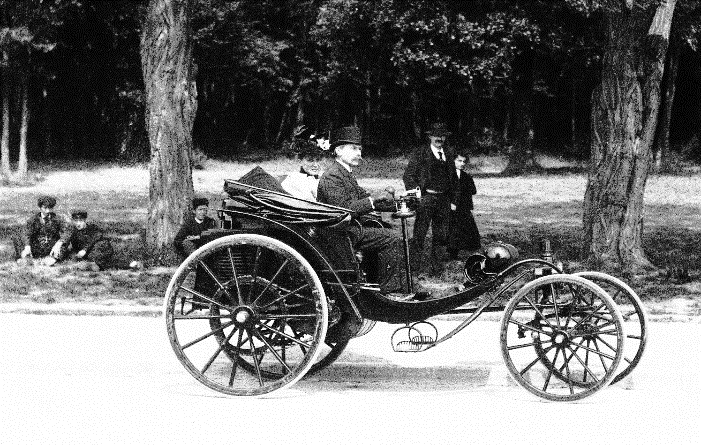
The death of Émile Levassor in 1897 confronted Panhard & Levassor with the need for a new technical leader. The young automobile industry demanded expertise in engines, transmissions, electrical devices, materials, and workshop organization. Krebs possessed an unusually broad command of precisely those fields. René Panhard therefore invited him to assume a leading role in the company.
Krebs later explained that he left military service for the automobile industry because he believed this new branch of engineering possessed an immense future. On 27 January 1899, at the age of forty-eight, he became Managing Director of Panhard & Levassor. Working with the company’s engineers, draughtsmen, and skilled workers, he set about improving the cars, expanding production, and preserving the high technical standards on which the firm’s reputation had been built.
Yet Krebs’s role in automotive history cannot be understood solely in connection with the large and prestigious Panhard & Levassor models. His influence was also felt in the field of lighter and more accessible cars.
Clément-Panhard and the Spread of Krebs’s Technical Ideas
One of the most interesting early branches of Krebs’s activity involved the development of the Voiture Clément-Panhard, or Clément-Panhard. This light car represented an important attempt to go beyond the world of large and expensive automobiles intended mainly for wealthy buyers.
The Clément-Panhard was fitted with the first automobile engine designed by Krebs himself. One of its important features was a system of regulation acting on the intake. Here we already see his concern not merely with building an engine, but with controlling its behaviour over a range of operating conditions—a line of thought that would later culminate in his automatic carburettor and broader research into engine regulation.
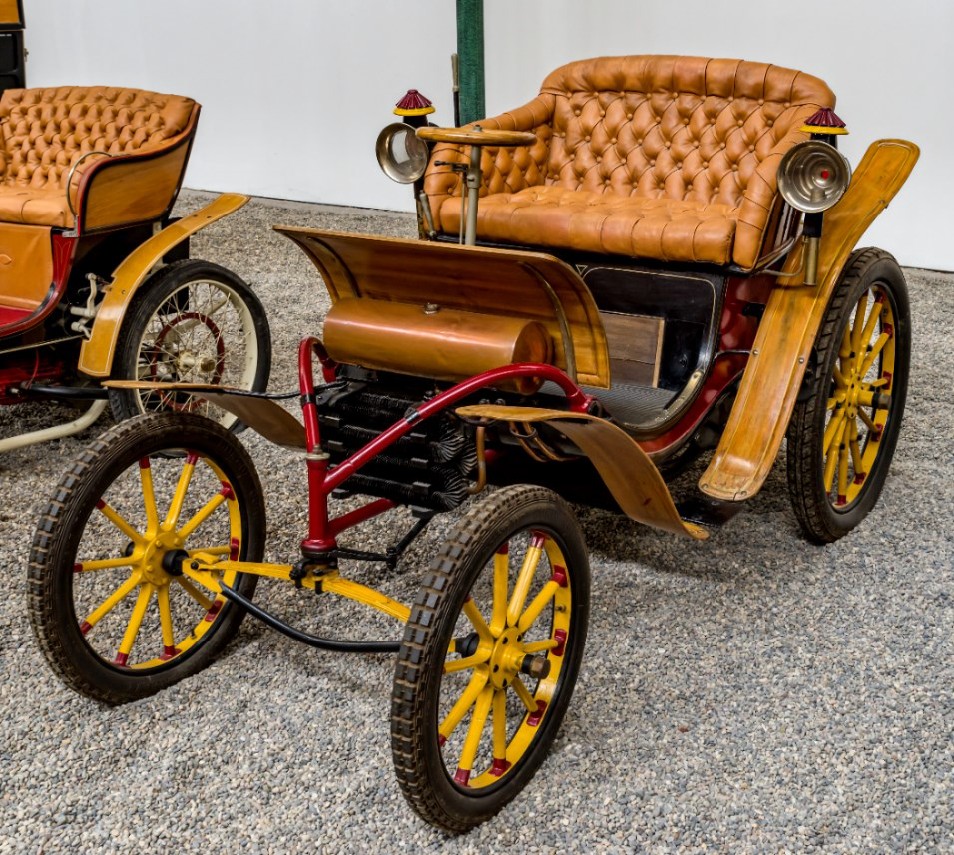
The cars were built by Adolphe Clément, who also supplied chassis to the Scottish entrepreneur Stirling for sale in the English-speaking world. Through this network, technical solutions developed in France spread beyond the continent. The Clément-Panhard therefore forms part of the early international history of the motorcar, in which ideas circulated through licensing, production agreements, and export markets.
Clément later drew on the same engineering ideas in his Clément Autocycle with Removable Motor, a light machine whose construction depended on Panhard & Levassor patents. In this way, Krebs’s engineering influenced not only the cars of his own firm but also the broader development of light motor transport.
The historical importance of the Clément-Panhard lies partly in what it reveals about Krebs’s industrial vision. From an early date, he recognized the potential of relatively simple, light, and accessible cars. This concern would later reappear in internal debates over the future direction of Panhard & Levassor.
Steering, Engines, and the Improvement of the Motorcar
Krebs devoted particular attention to steering. He did not invent the steering wheel as such, but he played a major role in its practical improvement, notably through the use of an inclined steering wheel and refined steering mechanisms on Panhard & Levassor cars, especially around the Paris–Amsterdam–Paris event of 1898.
The move from the traditional tiller to the steering wheel greatly improved the handling of increasingly heavy and fast motorcars. In Britain, one of the early examples of this development was associated with Charles Rolls, whose car is often cited as the first in Great Britain to be fitted with a steering wheel. The international spread of this form of control reflected changing expectations of comfort, precision, and safety.
Krebs studied steering geometry, self-centering action, and the reduction of unwanted reactions transmitted from the road to the driver. Of special importance were caster angle and irreversible steering. The irreversible steering gear reduced the tendency of road shocks to force the steering control back against the driver, making early automobiles safer and less tiring to guide. Both principles, developed by Krebs, have had a lasting significance in the history of automotive steering and remain present in modern practice, including motorcars fitted with power-assisted steering.
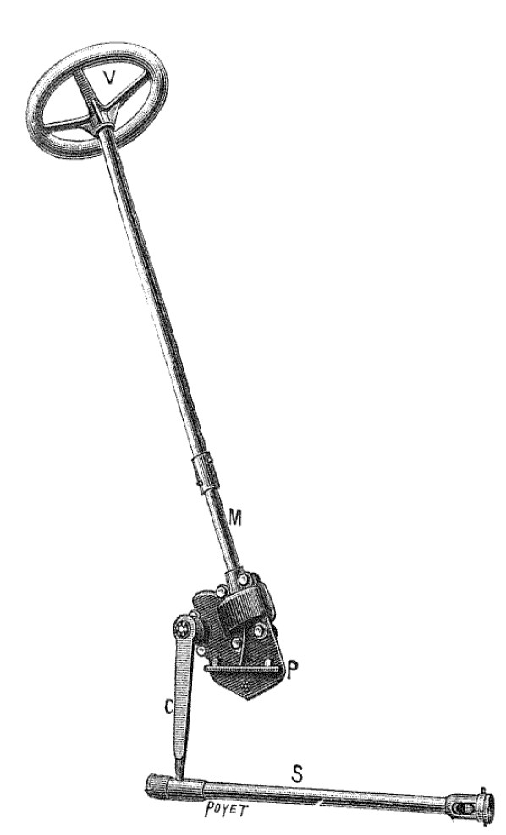
As motorcars became faster and heavier, refinements in steering geometry, suspension, and chassis elasticity were no longer minor conveniences. They became essential conditions of stability and safety. Krebs was among the first to treat these matters in a coordinated way.
Between 1897 and 1901 he obtained twenty-four patents. Some related to woodworking machinery, reflecting the older industrial specialization of Panhard & Levassor, while others concerned clutches, differentials, brakes, pumps, governors, and ignition systems. Under his direction the design office developed new engines, improved materials, and better manufacturing methods. Among the notable products of this work were the Centaure engines.
Krebs also improved engine balance, running speed, gearboxes, alloy steels, multi-disc clutches, and testing methods. His work was not a random series of isolated inventions but part of a sustained programme to make the automobile a more complete, reliable, and better engineered machine. Motor races, which subjected cars to unusually severe tests, played an important role in this process.
The Automatic Carburettor of 1902: Krebs’s Great Invention
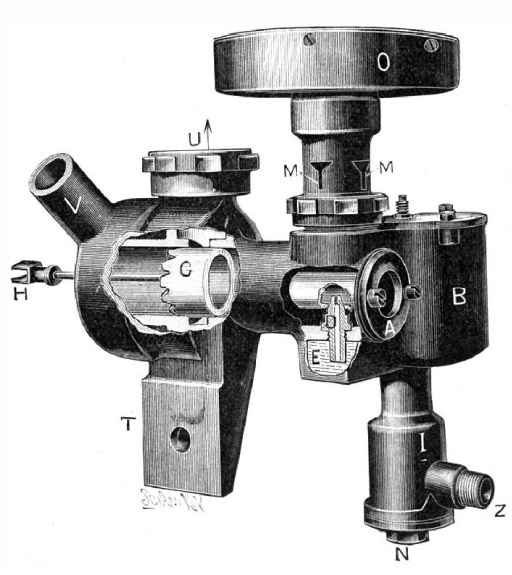
Among the many achievements of Arthur Krebs, the automatic carburettor patented in 1902 deserves a special place. If many of his earlier automotive developments represented important innovations, this device amounted to a true invention. It provided a fundamentally new way of regulating the mixture in an internal-combustion engine and opened new practical possibilities for the motorcar.
Early petrol engines could work tolerably well only within a limited range of speeds. But when speed and load changed, maintaining the proper air-fuel mixture became extremely difficult. Conventional carburettors could produce mixtures that became too rich or too lean, with resulting loss of power, inefficient combustion, and irregular running. Drivers often had to intervene constantly in mixture control, and slowing a vehicle commonly required disengaging the clutch.
Krebs later summarized the problem in striking terms: one could not slow down without declutching. In other words, the engine lacked the flexibility necessary to run steadily at low speed while retaining the ability to increase power smoothly. It was this practical difficulty that led him to develop an automatic carburettor.
The principle of the invention lay in the use of pressure variations in the induction system. Krebs’s carburettor combined fuel metering with auxiliary air passages governed by a diaphragm and valve. As intake depression changed, the system admitted supplementary air in the proper proportion. In this way the carburettor automatically maintained the desired relation between air and petrol over a wide range of engine conditions. The driver no longer needed to regulate the mixture continuously by hand.
The novelty of the design did not lie merely in the existence of an additional air valve. Such devices were known before, including in American “Jack Pot” carburettors. Krebs’s achievement consisted in the new scientific use of supplementary air, based on a mathematical analysis of mixture formation and intake pressure. He did not merely add another device to an existing carburettor; he created a theoretically grounded system of automatic regulation.
Krebs developed a mathematical formula and a characteristic curve describing the carburettor’s operation, and he presented the results to the Académie des Sciences. These calculations enabled him to determine the necessary dimensions of the apparatus before building it. During his testimony in New York in 1906 in the Selden patent litigation, he emphasized that the first apparatus built according to his calculations gave the expected results immediately, without a long sequence of empirical modifications. It was a striking example of mathematical engineering applied to one of the central practical problems of the petrol engine.
The Krebs carburettor effectively opened the way to stable low-speed running and to the continuous and progressive variation of engine speed and power. In practical terms, it gave the internal-combustion engine a flexibility it had previously lacked. The result was a motorcar that was easier to use, more economical, and more manageable for the driver.
International Recognition
The importance of Krebs’s carburettor was recognized almost immediately. In 1903 the American journal The Automobile, also referring to the Automotor Journal, described its advantages in detail. It stressed that the new carburettor maintained a nearly constant degree of carburation at all speeds, allowing power to vary smoothly with engine speed. It also eliminated the need for the usual dashboard adjustment for supplementary air and for a separate hot-air supply. Heating from the engine water jacket maintained the proper temperature in the mixing chamber.
A particularly vivid example was given. If a car on third speed normally travelled at about 50 km/h with the engine running at roughly 1,000 rpm, the new carburettor made it possible to reduce the engine speed to 200 rpm and the vehicle speed to about one fifth of the normal rate, without changing gear. Total power decreased, but the effectiveness of each power stroke remained. The journal regarded such flexibility as a major answer to one of the great needs of the petrol engine.
The invention became widely known in the United States, where auxiliary-air devices were already familiar. Yet it was Krebs’s principle that transformed this approach into a genuinely automatic carburettor. Its influence reached far beyond Panhard & Levassor and remained important for many years.
The continuing commercial importance of the invention is confirmed by company documents. In the minutes of the Panhard & Levassor management committee for 26 May 1913, Krebs recorded an American request to purchase the rights to the 1903 carburettor patent, which still had five years to run. The company proposed either a full sale for $10,000 or a licence for $2,000 plus a royalty of $1 per carburettor. More than a decade after the original development, American industry still considered Krebs’s patents commercially significant.
American technical literature of 1919 is equally revealing. One publication on automobile motors and mechanisms described Krebs as the inventor of what could be called the first automatic carburettor, in which the mixture was regulated automatically according to engine speed. It emphasized that the invention had provided a flexibility previously unsuspected and had inspired many later designs. Although those later carburettors differed in detail, many were still based on the auxiliary-air-valve principle first worked out by Krebs.
Later Development
The great advantage of the 1902 carburettor was the automatic regulation of mixture, but as engines evolved and became quicker in their response, the original moving air-valve system eventually encountered limits. These limitations did not invalidate Krebs’s principle; rather, they reflected the increasingly rapid operating changes demanded by later engines.
Krebs therefore continued his research and in 1913 replaced the earlier carburettor with a new design that used no moving regulating parts. This later carburettor represented a further step in the development of automatic mixture formation and was used by Panhard & Levassor throughout the interwar period. The history of Krebs’s carburettors thus did not end in 1902, but formed a continuing technical evolution.
In the management committee minutes of 18 June 1913, Krebs also outlined a classification of carburettors into three principal types: the Maybach carburettor, adjusted for normal running; the automatic carburettor, which acted on the air intake to regulate the mixture at low speed; and the Baverey carburettor, which acted on the liquid fuel. Some arrangements, he noted, combined several carburettors. This classification reveals his tendency to think in terms of principles rather than isolated constructions.
The automatic carburettor belonged to a larger programme of work that also included intake-valve control, governors, and ignition. In later years Krebs continued to investigate internal-combustion engines not only for automobiles but also for submarines and airships. He remained, in the fullest sense, a general engineer.
Further Developments: Testing, Flexible Transmission, and the Hybrid Car
Krebs attached great importance to accurate engine testing. His work on electric dynamometer brakes made it easier to test engines under controlled conditions. This was essential for the systematic improvement of performance, because it made it possible to measure the effects of changes with greater precision than road trials alone could provide.
In chassis engineering he worked on shock absorption, braking systems, clutches, and couplings for rotating shafts. He sought to reduce mechanical shock, improve durability, and make power transmission smoother. One of the best-known results of this work was the elastic coupling known as the Flector, developed in 1911. It was designed to transmit torque while accommodating small misalignments and reducing vibration and shock.
An especially interesting episode was Krebs’s connection with Ferdinand Porsche’s petrol-electric hybrid car. As early as 1900 he decided to invest in this promising design, which combined an internal-combustion engine with electric transmission. Krebs proposed the use of an engine with electromagnetic control of the intake valves, based on his patent FR301991. In this way the project united Porsche’s work in electric transmission with Krebs’s research in engine control.
This collaboration was entirely consistent with Krebs’s broader career. After the electric dirigible La France, the submarine Gymnote, and his own car with electromagnetic gear selection, he was already accustomed to combining electrical and mechanical systems. The hybrid vehicle therefore represented not an isolated curiosity but another example of his continuing effort to rationally combine different forms of power and control.
Nor did Krebs limit himself to conventional valve-operated petrol engines. Under his technical leadership Panhard & Levassor also developed its own versions of the Knight sleeve-valve engine. Research continued on cylinders, water cooling, lubrication, differentials, gearboxes, and mechanical linkages. All this shows the breadth of his interests. He did not pursue only a single famous invention, but sought the coordinated improvement of the automobile in all its principal elements.
Arthur Krebs and Charles de Fréminville
In March 1899 Krebs brought Charles de Fréminville into Panhard & Levassor as his close associate. Born in 1856, de Fréminville had graduated from the École Centrale in 1878 and had gained extensive experience in railway engineering. He studied equipment and rolling stock in France, Britain, and the United States. The two men were linked not only by professional interests but also by long personal ties: they had travelled together in America in 1885 to study fire-fighting technology, and Krebs had married Marie de Fréminville, Charles’s sister.
De Fréminville rose to become Technical Director and Deputy Managing Director. He was especially interested in metallurgy, precision manufacturing, and the organization of industrial work. Together, Krebs and de Fréminville formed an engineering leadership team whose authority rested above all on technical competence rather than family ownership. Under their direction Panhard & Levassor continued to improve its cars and expand its production.
The financial results of the company around the turn of the century testify to its success. For the financial year ending in September 1899, sales approached seven million francs, with net profits exceeding two and a half million francs. Approximately 450 motorcars were produced, and the workforce numbered about 950. These figures show both the profitability of early automobile manufacture and the relatively modest production scale that still prevailed before the age of true mass production.
Krebs and de Fréminville understood clearly that future growth required not only technical progress but also better industrial organization. Krebs’s experience in military workshops and the fire brigade, combined with de Fréminville’s industrial knowledge, made them see the motor factory as a complex system whose efficiency depended on the coordinated work of engineers, draughtsmen, metallurgists, machinists, and administrators.
The Influence of Panhard & Levassor Abroad
The technical influence of Panhard & Levassor under Krebs extended well beyond France. A particularly striking example may be found in the early history of FIAT.
In 1901 the board of the Italian company decided to use a light Panhard & Levassor car as a model for one of its own designs. Italian industrialists were attracted by the French car’s compactness, rational construction, and practical qualities. The result contributed to the development associated with the successful FIAT 12 HP.
This episode illustrates the international authority of French automotive engineering at the dawn of the motor industry. Technical ideas developed in Paris did not spread only through formal licences. They also served as models for young firms seeking to establish their own production. The influence of Panhard & Levassor could thus be felt both in the English-speaking world through Clément-Panhard and in Italy through the early history of FIAT.
For Krebs, such foreign interest was more than a matter of prestige. It confirmed that the cars and mechanisms developed under his leadership possessed real value to manufacturers in other countries. At the same time, the rise of foreign competition increasingly changed the situation of Panhard & Levassor itself, forcing the firm to reconsider its industrial strategy.
The End of the Belle Époque: Luxury Versus Mass Production
At the turn of the century, Panhard & Levassor occupied a highly prestigious place in the automobile world. Its cars had won major competitions, and wealthy buyers admired their quality and reputation. Gradually, however, this prestige became a strategic constraint. In 1901 the board adopted the principle that the company should concentrate mainly on expensive cars for affluent customers. This policy could generate high margins, but it increasingly conflicted with the changing structure of the market.
New manufacturers such as Renault, Peugeot, Mors, Darracq, and De Dion-Bouton strengthened their position. Competition became more intense, and the American financial crisis of 1907 further weakened demand. Panhard & Levassor was forced to reduce its workforce and reconsider its heavy dependence on the luxury market. Meanwhile, American firms, above all Ford, demonstrated the advantages of simplified model ranges, standardized parts, and large-scale manufacture.
Krebs and de Fréminville came to believe that industrial survival required a fundamental reorganization. They argued for fewer models, greater standardization, more precise production, and the development of comparatively affordable cars. In a report of January 1912, Krebs emphasized that modern manufacturing required accurate components and close coordination between engineers and workers. Economy, in his view, depended on quantity production with a minimum of model variation.
Yet opinion within the company remained divided. René de Knyff, the celebrated former Panhard racing driver and influential administrator, favoured prestigious sporting and luxury models. One notable expression of this policy was the elegant Skiff-bodied car for wealthy clients. Krebs, by contrast, advocated the development of less expensive models capable of attracting a wider public.
Behind this disagreement lay a fundamental contrast between two conceptions of the motor industry. One saw the automobile as a costly individual product for a relatively narrow class of buyers. The other increasingly understood it as a standardized industrial article that could reach a broader market. Krebs belonged decisively to the second view. He saw the future in rational production, structural simplicity, and wider accessibility, even if final authority remained with the board and shareholders.
The Panhard & Levassor X19
One of the clearest demonstrations of Krebs’s industrial judgement was the Panhard & Levassor X19, introduced in 1912. This relatively inexpensive 10 h.p. car was conceived as an entry-level model capable of reaching buyers for whom the traditional large Panhards were too costly.
Krebs wanted the X19 to be “as simple as possible,” without sacrificing technical quality. On the contrary, simplicity of design made it possible to combine ease of production and operation with modern engineering solutions. Among the features incorporated in the car was the Flector elastic coupling, one of Krebs’s later technical developments.
The X19 enjoyed considerable public success and remained in production into the following decade. It demonstrated that simplicity, moderate cost, and genuine technical merit were entirely compatible. Buyers recognized the value of a car built according to Krebs’s industrial principles.
Significantly, Krebs left Panhard & Levassor not only a body of patents and engineering ideas, but also a successful production model that continued after his departure. In that sense, the X19 stood as a practical summary of his long struggle for a more rational future for automobile manufacturing.
The First World War and Departure from Panhard & Levassor
With the outbreak of the First World War in 1914, industrial priorities changed abruptly. Krebs took part in redirecting the resources of Panhard & Levassor toward military production, drawing on his long experience in both engineering and military affairs. The company’s workshops, engineering staff, and productive capacity became part of the broader French war effort.
Yet the war did not remove the internal disagreements that had long existed over management and industrial policy. Conflicts persisted between defenders of the older strategy and those who sought a deeper reorganization of the enterprise. After prolonged tensions, Charles de Fréminville left the firm. In 1916 Krebs also resigned as Managing Director, though he continued for a time to serve as an engineering adviser.
His departure brought to an end nearly two decades of direct responsibility for one of the most influential automobile companies of the pioneering age. During those years Panhard & Levassor had evolved from a famous early workshop into a major industrial enterprise with international influence. Krebs played a central part in that transformation, even if his industrial vision did not always prevail in the decisions of the board.
Later Life and Historical Legacy
Arthur Constantin Krebs lived long enough to see the automobile become an established element of modern life. He also saw aviation advance far beyond the experimental stage reached in his own day at Chalais-Meudon. His work had belonged to the origins of that transformation.
In his later years his achievements continued to be recognized. The fiftieth anniversary of the flights of La France recalled his importance in the history of aeronautics. In the final year of his life he was made a Commander of the Legion of Honour, a fitting acknowledgement of the range of his technical and public service. He died in Quimperlé in March 1935.
The scale of Krebs’s achievement is exceptional. In aeronautics he helped create one of the first navigable airships capable of returning to its point of departure. In submarine engineering he designed electrical machinery and important navigational devices. In the Paris Fire Brigade he united technical reform with workshop organization and institutional modernization. In automobile engineering he developed or improved steering systems, transmissions, engines, regulating devices, testing methods, and numerous chassis components.
Yet his importance does not lie in the number of his patents alone. Krebs was one of those engineers who linked different branches of technology and applied the knowledge of one field to the problems of another. Experience acquired in electric flight and submarine propulsion later reappeared in automotive control systems and hybrid power. Research on internal-combustion engines, first pursued in connection with balloon propulsion, led to inventions that transformed the flexibility of the motorcar. Experience in military and fire-service workshops prepared him for the direction of a large industrial enterprise.
Among all these contributions, the automatic carburettor of 1902 remains particularly significant. Its importance lay not simply in an improved fuel supply, but in a fundamentally new approach to regulating the engine. Through mathematical reasoning Krebs created a device that gave the internal-combustion engine a new degree of flexibility. The invention achieved international recognition, influenced later developments, and marks one of the essential stages in the history of mixture formation in the petrol engine.
Finally, Krebs was one of the engineers who grasped earlier than many of his contemporaries that the future of automobile manufacture would require a shift from expensive small-series production to rational industrial organization. His insistence on standardization, simplified model ranges, precision, and comparatively affordable cars anticipated changes that would shape the twentieth-century motor industry. The success of the X19 confirmed the practical soundness of this vision.
Arthur Constantin Krebs should therefore be remembered not merely as the successor to Émile Levassor at Panhard & Levassor, but as one of the most versatile engineers of the generation that linked the experimental technologies of the nineteenth century to the industrial systems of the twentieth. His career shows that the history of the early automobile depended not only on new engines and mechanisms, but also on the ability to unite science, design, and organization in a coherent whole.
Suggested Sources
- Vladimir Vershinin, Panhard & Levassor, especially the sections on Arthur Constantin Krebs and the early automobile industry.
- Arthur C. Krebs, testimony in the Selden automobile patent litigation, New York, 1906.
- Arthur Krebs’s communication to the Académie des Sciences on the mathematical principles of his automatic carburettor.
- French patent FR256344 (1896), motor vehicle of Arthur Krebs.
- French patent FR301991, electromagnetic regulation of intake valves.
- The Automobile (1903), discussion of the Krebs automatic carburettor.
- American technical literature of 1919 on the history and operation of automatic carburettors.
- Panhard & Levassor management committee minutes of 26 May and 18 June 1913.
- Historical materials on the Clément-Panhard, Adolphe Clément, and Stirling.
- Historical documents relating to Arthur Krebs and Ferdinand Porsche’s petrol-electric car.
- Materials on the early history of FIAT.
- Wikimedia Commons for historical photographs, patent drawings, and technical illustrations.
- Research materials by Philippe Krebs on Arthur Constantin Krebs and the history of Panhard & Levassor.