
Italy: From Early Experiments to International Racing Triumphs (1893–1914)
At the end of the nineteenth century, when France was rapidly becoming the world’s leading automobile-producing nation, Italy was still taking its first steps towards motorisation. The country had been politically unified only in 1861, and its industrial development remained uneven. Its economy was still predominantly agricultural, while the modern engineering industries were concentrated mainly in the northern regions.
Yet within less than two decades, Italy would establish some of Europe’s most remarkable automobile manufacturers and become a formidable competitor in international motor racing. How did this transformation take place?
The First Italian Motor Vehicles
Interestingly, the first automobiles to appear on Italian roads were not Italian at all. In January 1893, a French Peugeot Type 3 was delivered to Gaetano Rossi, an industrialist from Schio. The following year, another French automobile, a Panhard & Levassor, was purchased by the Marquis Carlo Ginori of Florence.
France had already demonstrated that the automobile could become a practical means of transportation. Italian engineers and entrepreneurs were eager to follow.
Nevertheless, Italy had its own traditions of mechanical invention. As early as the 1850s, Eugenio Barsanti and Felice Matteucci had conducted important experiments with internal combustion engines, obtaining a patent in 1854. Their work belonged to the early history of engine development, long before the automobile became a commercial product.
Among the pioneers of Italian motoring, Professor Enrico Bernardi occupies a particularly important position. During the 1880s and 1890s, Bernardi developed small internal combustion engines and experimented with their application to road vehicles. His designs eventually led to the production of three-wheeled motor vehicles by Miari & Giusti in Padua.
Another pioneer was Michele Lanza, a Turin industrialist who constructed a four-wheeled automobile in 1895. Although his enterprise never achieved lasting commercial success, his experiments helped demonstrate that automobiles could be designed and manufactured in Italy.
Turin: The Birthplace of the Italian Automobile Industry
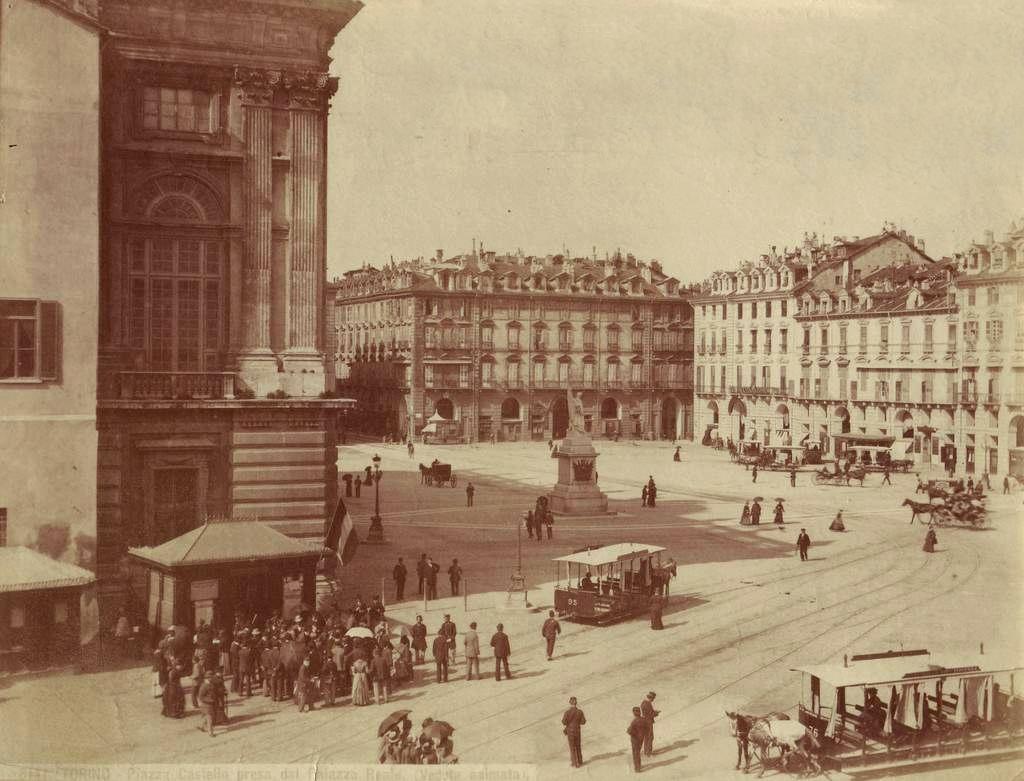
Why did Turin, rather than Rome, Florence or Naples, become the principal centre of the Italian automobile industry?
Several circumstances worked in its favour. Turin possessed a skilled industrial workforce, developed mechanical workshops, a tradition of carriage building and access to relatively inexpensive hydraulic power. Its technical schools trained engineers capable of developing increasingly sophisticated machinery.
Geography was equally important. Situated close to the French frontier and connected with France by railway, Turin was well placed to observe developments in the world’s most advanced automobile industry.
One of the decisive figures was Giovanni Battista Ceirano, an entrepreneur whose activities would influence the creation of several famous Italian automobile companies.
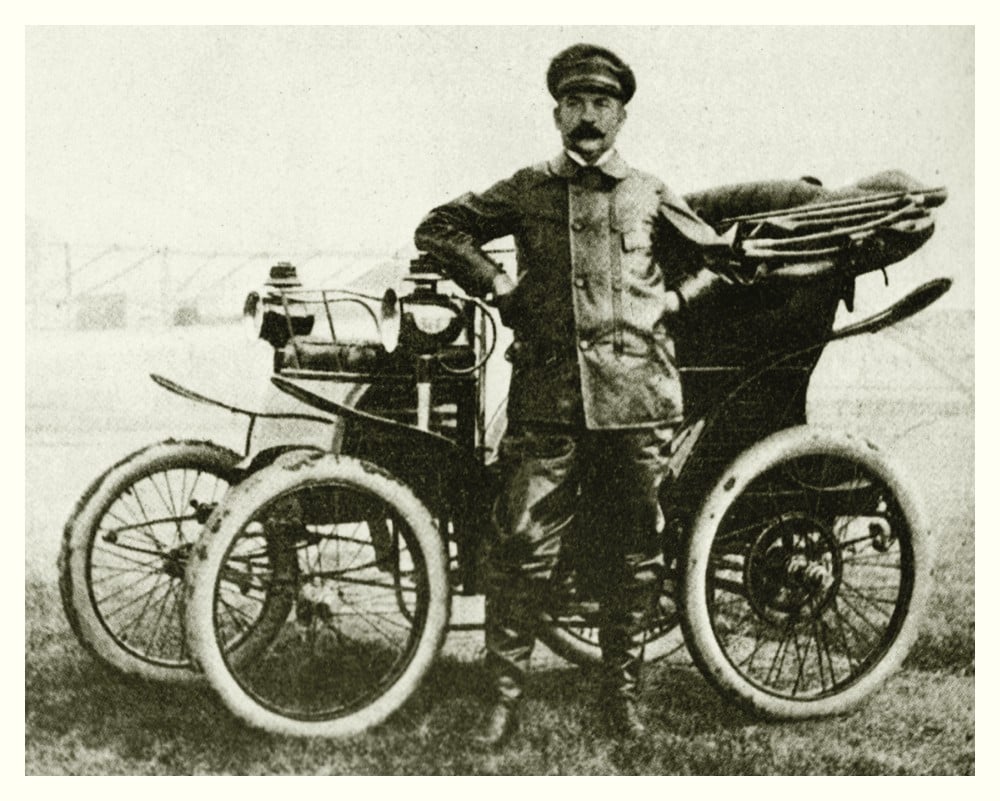
In 1898, Ceirano and his associates established a business that developed the Welleyes automobile, designed by engineer Aristide Faccioli. The little two-cylinder car attracted sufficient interest to persuade a group of Turin investors that automobile manufacturing could become a serious industrial undertaking.
On 11 July 1899, the Fabbrica Italiana Automobili Torino — better known by its initials FIAT — was founded.
Among its original investors was Giovanni Agnelli, who would subsequently become the dominant figure in the company’s development. FIAT acquired Ceirano’s automobile business, including its designs and equipment, and introduced the 3½ HP, derived from the Welleyes.
The foundations of Italy’s largest automobile manufacturer had been laid.
The Emergence of Italian Manufacturers
FIAT was by no means alone. At the beginning of the twentieth century, numerous automobile manufacturers appeared in Turin, Milan and other industrial cities.
In Milan, Edoardo Bianchi, already well known as a bicycle manufacturer, entered automobile production. In 1900, Cesare Isotta and the brothers Vincenzo, Oreste and Antonio Fraschini established the company that would become Isotta Fraschini, eventually renowned for its powerful engines and luxurious motorcars.
Turin produced several other important manufacturers. Itala was established in 1903 and soon distinguished itself in international competition. Vincenzo Lancia, a talented engineer and racing driver associated with FIAT, founded his own company in 1906 with Claudio Fogolin.
Another celebrated Italian marque emerged in Milan in 1910, when the former Italian Darracq enterprise was reorganised as A.L.F.A. — Anonima Lombarda Fabbrica Automobili. Its early automobiles, designed under the direction of Giuseppe Merosi, would establish the foundations of the future Alfa Romeo.
The great majority of these early automobiles were expensive machines, built in relatively small numbers for wealthy customers. However, the Italian industry was gradually developing its own technical identity, rather than simply reproducing foreign designs.
Motor Racing: Italy Challenges Europe
Perhaps nothing contributed more to the international reputation of Italian automobiles than motor racing.
For the emerging manufacturers, competition offered an opportunity to demonstrate speed, reliability and engineering quality. Racing victories could attract wealthy customers and generate publicity far beyond Italy’s borders.
In 1906, the Sicilian aristocrat Vincenzo Florio inaugurated the famous Targa Florio, a demanding road race through the mountainous countryside of Sicily. The first competition was won by Alessandro Cagno driving an Itala.
The following year marked an extraordinary achievement for Italian motor racing.
In 1907, Felice Nazzaro, driving FIAT automobiles, won three of the most prestigious international competitions: the Targa Florio, the German Kaiserpreis and the French Grand Prix at Dieppe.
These victories were particularly significant because France had dominated the formative years of international automobile competition. FIAT had demonstrated that an Italian manufacturer could defeat some of Europe’s most experienced rivals.
But another Italian automobile was about to accomplish an even more spectacular feat.
In 1907, Prince Scipione Borghese, accompanied by mechanic Ettore Guizzardi and journalist Luigi Barzini, undertook the extraordinary journey from Peking to Paris in an Itala 35/45 HP.
The route crossed deserts, mountains and vast territories almost entirely lacking suitable roads. After approximately 16,000 kilometres and 60 days of travel, the Italian automobile arrived in Paris, finishing far ahead of its competitors.
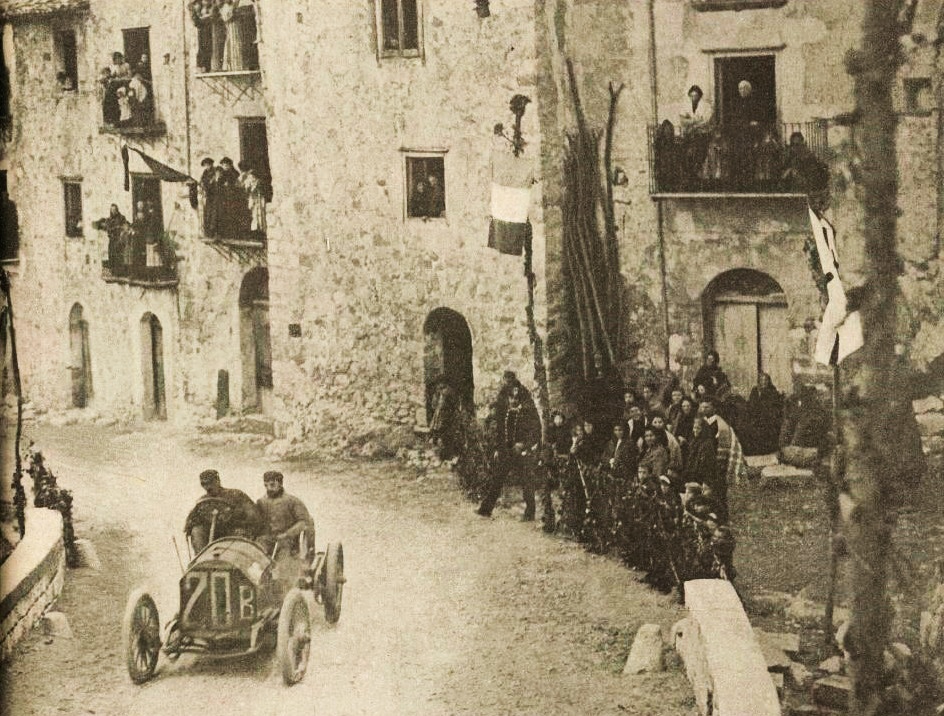
Felice Nazzaro and mechanic Antonio Fagnano in a FIAT 28/40 HP during the Targa Florio, Sicily, 21 April 1907. Source: La Vie au Grand Air, 4 May 1907
The achievement attracted international attention and became one of the most celebrated adventures of the early motoring age.
From Small Workshops to an Automobile Nation
The expansion of Italian automobile manufacturing was remarkable, although the domestic market remained comparatively small.
In 1899, only 111 motor vehicles were recorded as circulating in Italy. By 1910, the number had risen to 7,762. During the same period, a growing network of automobile manufacturers, specialist engineering firms, coachbuilders and component suppliers emerged, particularly around Turin and Milan.
Italy had not overtaken France in automobile production, nor had the motorcar become an everyday means of transportation for the Italian population. It remained primarily a possession of the wealthy.
Nevertheless, by the eve of the First World War, Italy had established a viable automobile industry with an increasingly international reputation.
What made the Italian achievement particularly interesting was the combination of industrial ambition, skilled craftsmanship, mechanical ingenuity and enthusiasm for competition. Italian manufacturers had learned much from their French and German predecessors, but they were already developing distinctive engineering traditions of their own.
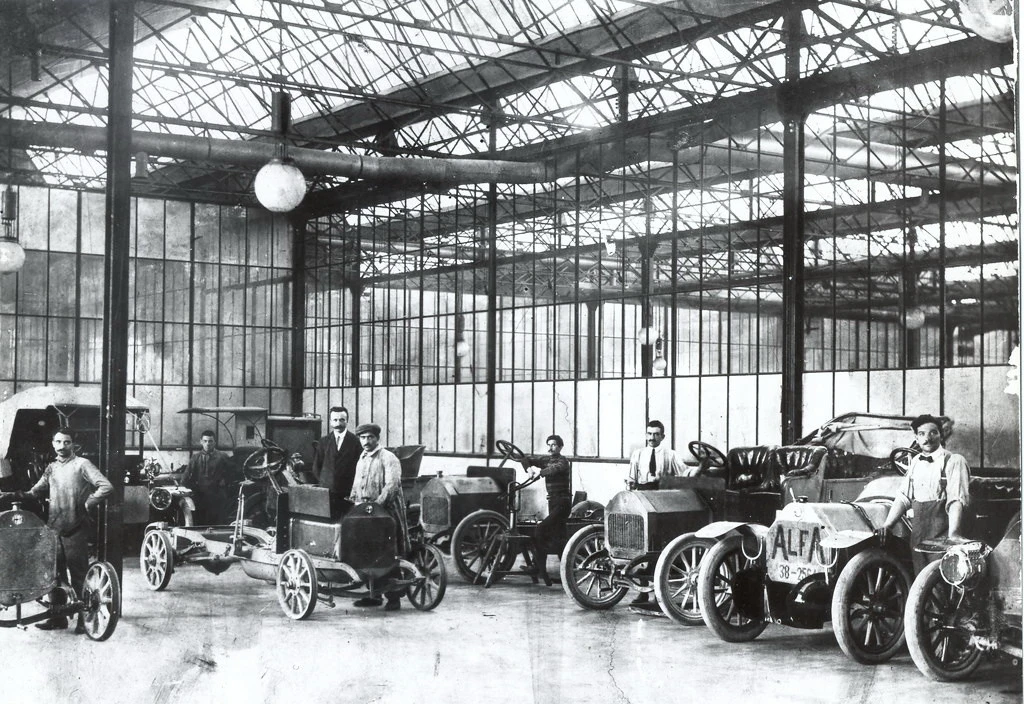
The age of FIAT, Itala, Isotta Fraschini, Lancia and A.L.F.A. had begun. The achievements of these pioneers would provide the foundations for one of the world’s most celebrated automobile traditions.