
Paris–Bordeaux–Paris Race (1895)
Paris–Bordeaux–Paris, 11–15 June 1895. A distance of roughly 1,180–1,190 km; 46 entries, 22 actual starters, and only nine automobiles classified within the official 100-hour limit. These bare figures conceal one of the formative dramas of motoring history: a test of engines, transmissions, tyres, energy storage, roads, and human endurance in which Émile Levassor finished first, but Peugeot received the principal prize.
From Paris–Rouen to a far more formidable experiment
The Paris–Rouen competition of July 1894 had demonstrated that self-propelled vehicles could operate in ordinary road traffic. Yet its relatively modest distance could hardly settle the questions facing manufacturers. Could an automobile sustain motion across France for two days and nights? Would petrol, steam or electricity prove the most practical source of propulsion? And how much maintenance would be necessary on a journey that a horse-drawn carriage could scarcely contemplate?
Count Jules-Albert de Dion, Baron de Zuylen de Nyevelt and a committee of motorists and industrialists envisaged a far more ambitious trial: from Paris to Bordeaux and back, approximately 1,200 kilometres. The programme attracted press interest, financial subscriptions, and participation from builders who had been rivals only a year earlier. A display associated with the competition took place at the Galerie Rapp, Champ-de-Mars; a magnificent lithographic poster by E. Clouet survives in the collection of the Musée Carnavalet.
Among those drawn into the preparations were leading manufacturers, engineers and public figures, including Henri Menier, Gordon Bennett, the Vanderbilts and the electrical engineer Marcel Deprez. The organising committee had to determine which kinds of machine could be admitted, how repairs would be supervised, and what constituted a meaningful test of a vehicle that was supposed to carry passengers rather than merely dash over a short straight road. The questions were practical and commercial as well as sporting.
The event was planned as a trial of practical endurance, although its competitive character was unmistakable. The decisive questions were not simply how fast a vehicle could run over a few kilometres, but whether its powertrain, running gear and crew would survive a long and unsparing journey. In the end, the rules themselves would produce an apparent paradox: the fastest car was not the recipient of the first prize.
The regulations: speed, endurance and four seats
The maximum permitted time was 100 hours. The main prize was reserved for an automobile designed to carry at least four persons; the advertised passenger capacity also mattered under the rules. Competitors had to carry their tools and undertake repairs under the conditions fixed by the organisers. This was not the beginning of modern circuit racing with pit crews and specialised support vehicles: the machine had to prove itself as a practical road vehicle.
The rule concerning passenger accommodation had consequences that were obvious even before the start. A lightly built two-seater offered a substantial advantage on rough roads, but it could not claim the main award. The regulations were intended to encourage useful road transport, not simply an exceptionally fast experimental single-purpose machine. This explains why the competition’s official prize list cannot be used as a simple ranking by either road speed or finishing order.
Contemporary results distinguish the order of arrival, the elapsed time measured from each vehicle’s individual starting signal, and the award of prizes. This distinction is indispensable to understanding the victory of Peugeot no. 16. Even today, many simplified accounts conflate the three.
A route across the heart of France
The vehicles assembled in Paris, proceeded to Versailles and then began the timed section at intervals. They travelled south through Étampes, Orléans, Blois, Tours, Poitiers, Ruffec, Angoulême and Libourne to the Bordeaux control, before retracing their route towards Paris. The officially published itinerary, prepared for La Locomotion Automobile by engraver P. Colas, was sufficiently detailed to show the road surface, railway crossings, bridges and changes of elevation.
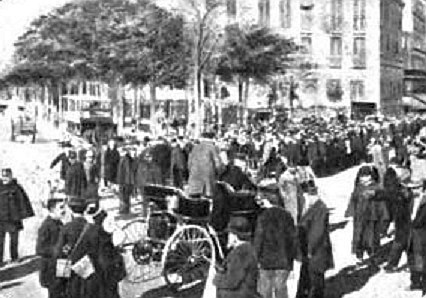
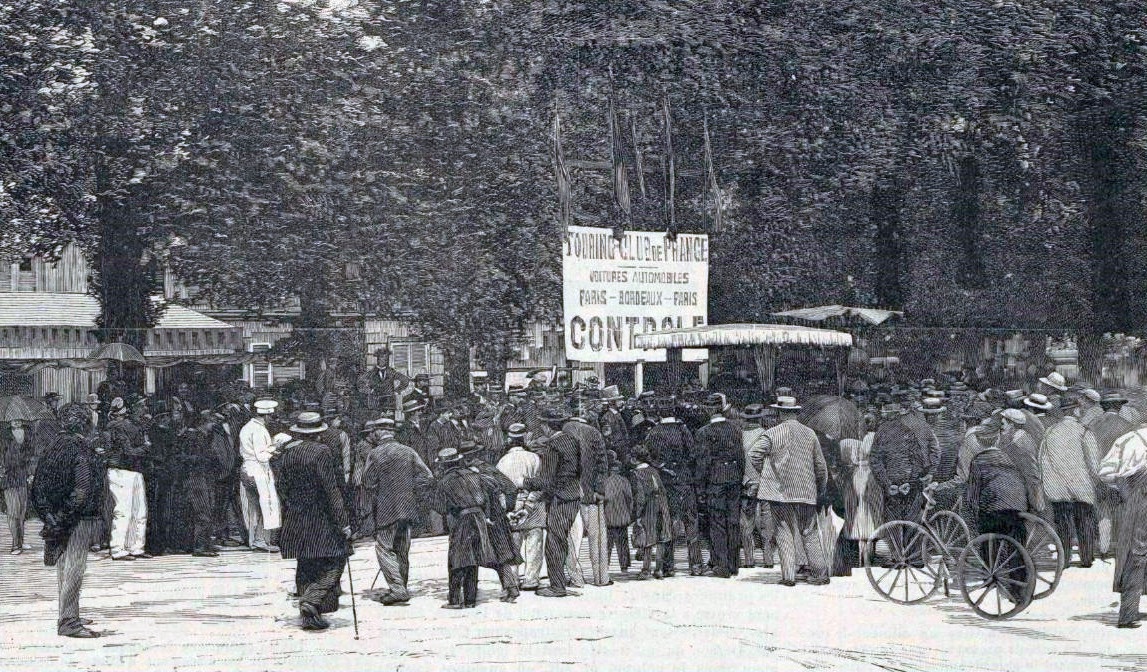
Distance figures vary according to whether authors count the ceremonial approach, the timed Versailles start, and the exact control-point measurement. A contemporary classification described the trial as 1,190 km; several later histories use 1,178 km or approximately 1,180 km. Such figures should be cited as belonging to particular sources, rather than blended into a false precision.
From the perspective of 1895 this was a tour of radically different road conditions, not an engineered racing circuit. Control points were linked by the telegraph, so reports of the competitors’ progress could reach Paris well before the automobiles themselves. A machine’s position therefore depended not only on the speed seen by the crowds, but also on the time recorded when it passed each control and on the hours already lost to roadside adjustments.
The competitors: three competing philosophies
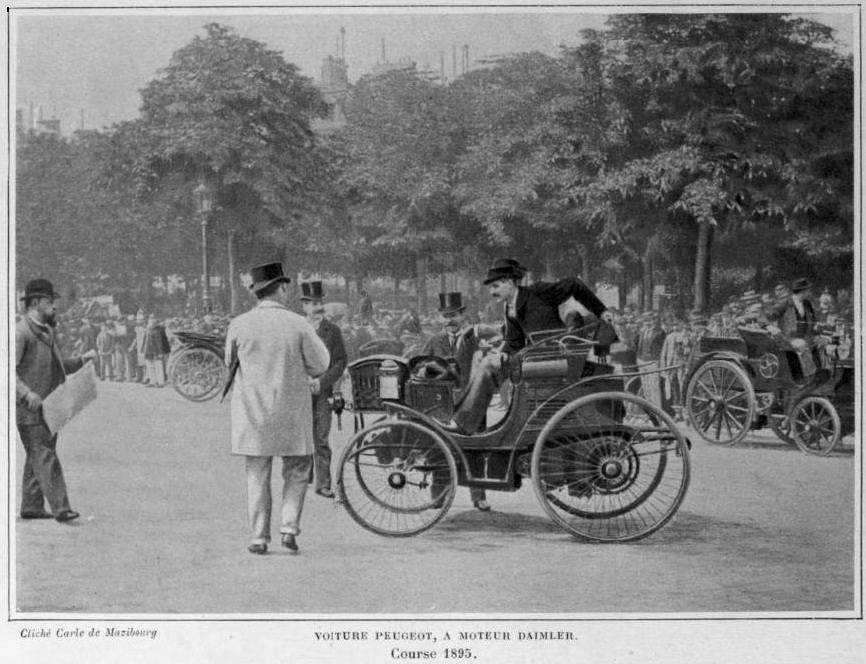
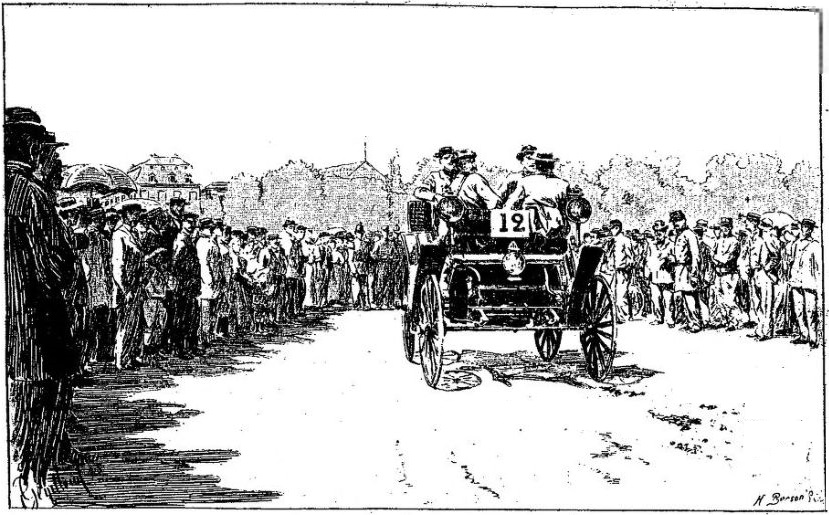
Of 46 entries, only 22 vehicles actually left Versailles, according to both La Locomotion Automobile and the contemporary account reproduced in Scientific American Supplement. Among them were petrol-powered cars by Panhard & Levassor, Peugeot, Roger and other builders; steam carriages by De Dion and Serpollet; an extraordinary older steam omnibus built by Amédée Bollée; the electric automobile of Charles Jeantaud; and motorised two-wheelers.
The diversity of the entry deserves emphasis. There was not yet an accepted automobile formula. Builders were still testing fundamental design decisions: engine position, transmission, cooling, wheel construction, tyres, and the appropriate balance between lightness and comfort.
Steam: impressive power, punishing weight
Steam remained a serious contender in 1895. De Dion’s machines demonstrated considerable speed early in the journey, but accidents and broken transmission components deprived them of a lasting advantage. Serpollet’s advanced steam technology met its own mechanical difficulties. In retrospect, the shortcomings were easier to describe than to solve: a steam automobile carried not merely an engine, but also a boiler, water supply, fuel and equipment designed to withstand high temperature and pressure.
According to later race narratives, De Dion’s steam entry led briefly near Orléans and Blois before a broken universal joint near Vouvray ended its bid. An early technical advantage in sheer pace was of little value once the transmission failed far from a workshop. Another episode associated with Bollée tells of attempts to cool an overheated connecting rod with wet cloths and the damage that followed when the cloth was not removed before restarting. Such details are best treated as reported anecdotes unless individually verified in the surviving day-by-day coverage.
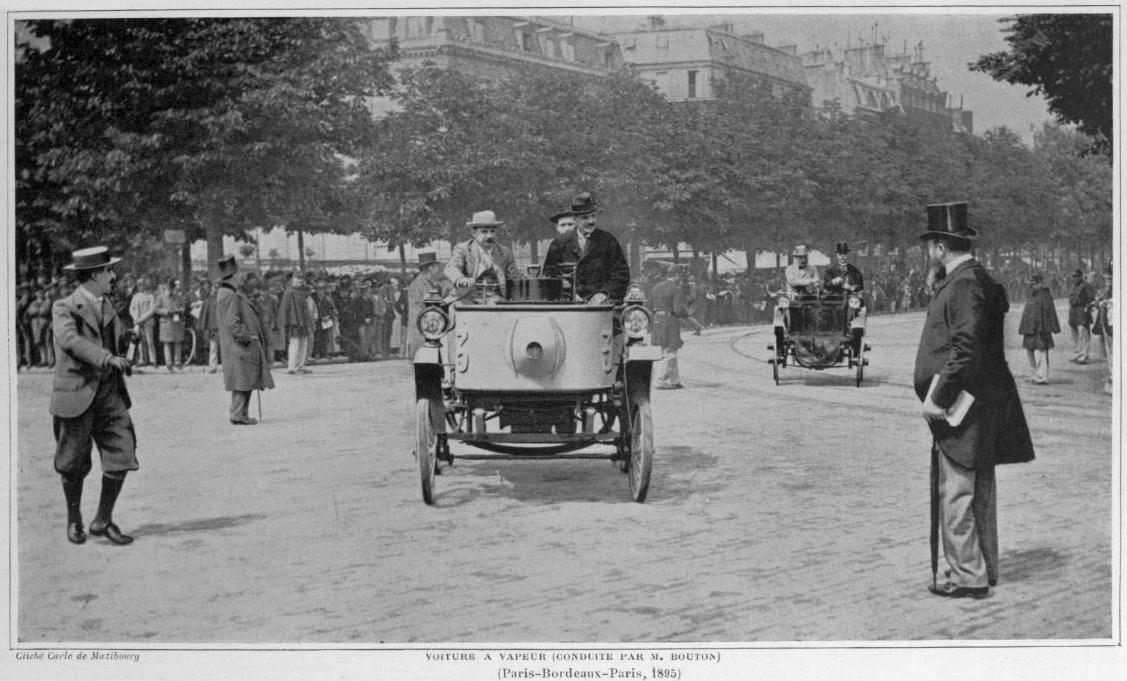
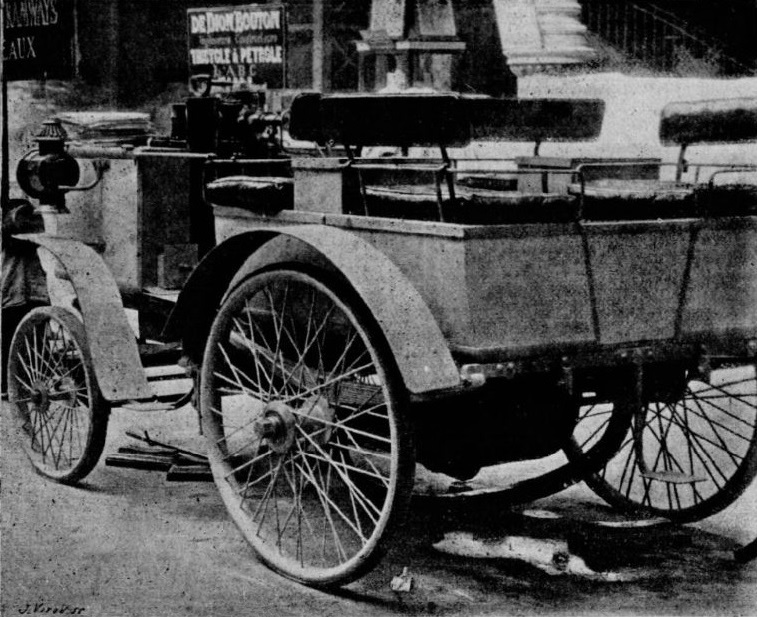
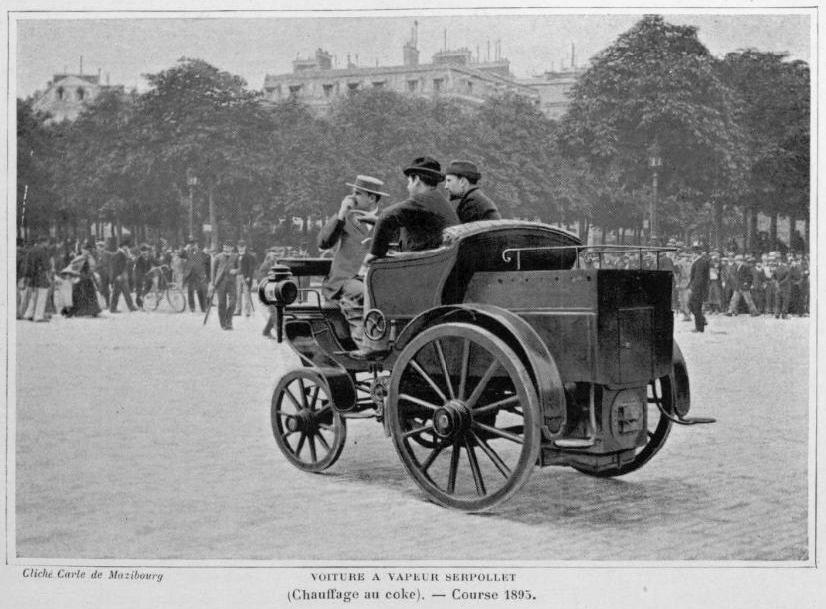
One steam vehicle nevertheless reached the official finish: the large Bollée omnibus. Its endurance was remarkable precisely because its mass and numerous mechanical complications made the journey so demanding. Scientific American later described an ingenious roadside repair in which broken transmission parts were reinforced using salvaged metal and improvised rivets.
Electricity: flexibility defeated by energy storage
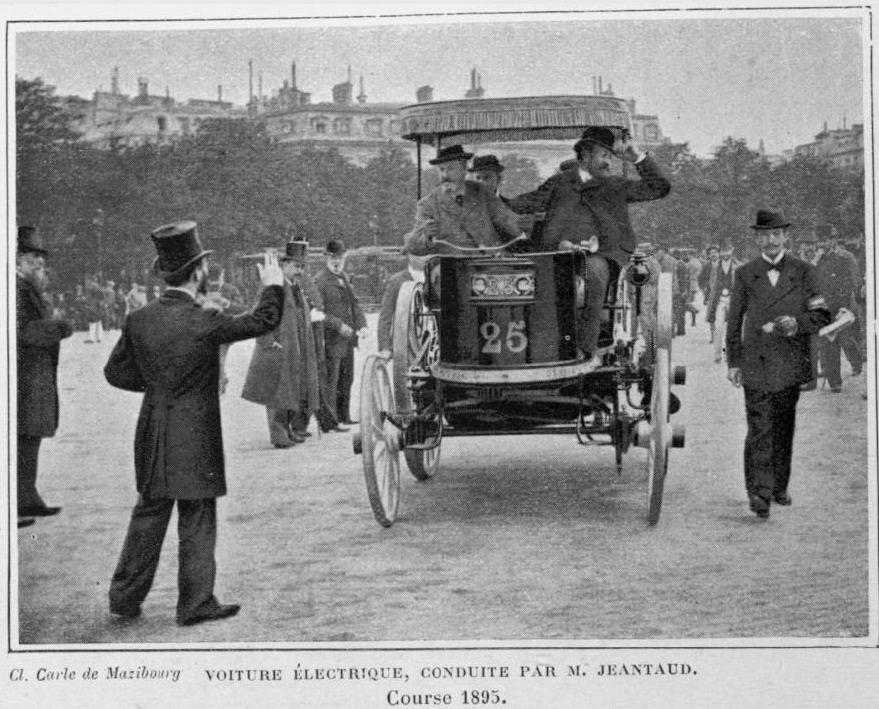
Charles Jeantaud’s electric carriage offered another vision of the future. Electric motors were quiet, smooth and easy to control, but the lead-acid accumulators of the time imposed a severe penalty in mass and available range. Even with arrangements to replenish or exchange batteries, the problem of sustaining energy over an extended road journey was formidable. Jeantaud’s entrant did not feature among the nine officially classified finishers.
Motor bicycles: an experiment within the experiment
Steam and petrol-powered bicycles appeared alongside the larger automobiles. Their presence is a reminder that the distinction between motorcycle and motorcar was still forming. A lightweight two-wheeler might appear to have an advantage on a rough road, but contemporary machines exposed their riders and fragile components to enormous punishment. The bicycle entries could not secure an officially classified finish.
Émile Levassor’s no. 5: a machine built to finish first
Panhard & Levassor entered four automobiles, including the two-seat no. 5, which Émile Levassor intended to drive personally; other vehicles of the firm included nos. 6, 7 and the larger five-seat no. 28. No. 5 followed the characteristic Panhard system, with its engine ahead of the driver and mechanical drive to the rear axle, but the car was deliberately lighter than the ordinary touring models.
Levassor’s special car incorporated a Daimler–Maybach Phoenix engine and a gearbox enclosed in a protective casing with lubrication. Both developments answered real questions of reliability. On an unmade road, open gears were exposed to grit, dust, water and stones. Protection against contamination could be as significant as an increase in horsepower. Later illustrated accounts of the Phoenix-engined machine help explain why technical reliability, not peak speed alone, was decisive.
The firm’s four entries also represented a small comparative experiment. Nos. 6 and 7 had already drawn upon experience gained in earlier road trials; no. 28 was a heavier five-seat machine with a rear-mounted Daimler-pattern engine, while no. 5 concentrated Levassor’s thinking about the light and relatively reliable automobile. Its two-seat body could not satisfy the main-prize condition, but its enclosed, better-protected transmission had an obvious advantage over mechanisms exposed to abrasive dust.
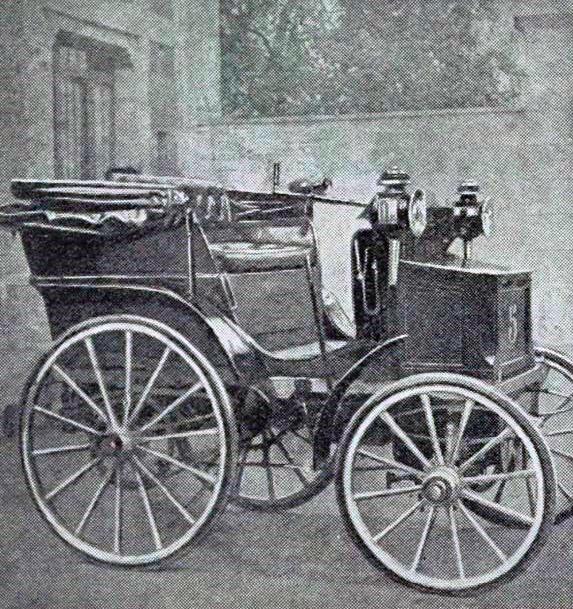
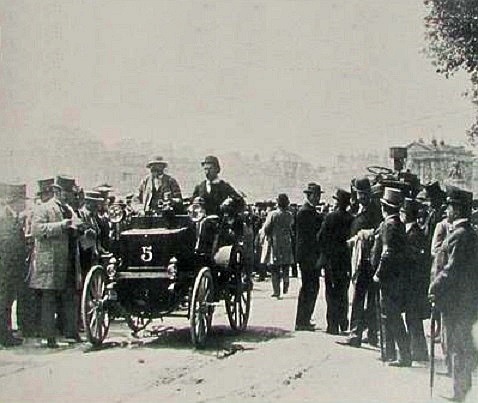
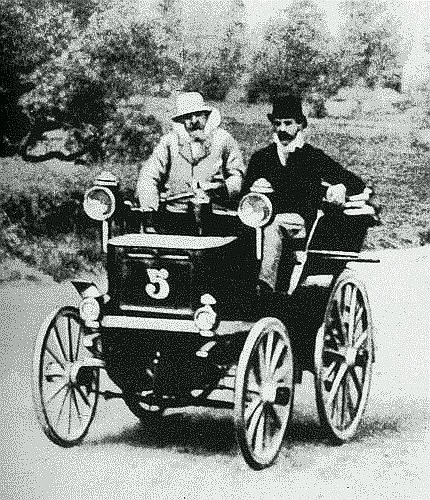
At about 600–650 kg, depending on which historical specification is used, no. 5 represented a marked preference for low mass. That decision had consequences for speed, fuel consumption and mechanical stress. It also made the car ineligible for the principal four-seat prize. Levassor appears to have accepted that compromise willingly: the achievement he sought was to be the first to return to Paris.
The start: Versailles, 11 June 1895
On the morning of 11 June, vehicles, drivers and mechanics gathered near the Arc de Triomphe. After the procession to Versailles, the cars started one after another around midday. Photographs show crowds, hats, period uniforms and bizarrely varied machines, many of which still resembled horse-drawn carriages with their shafts removed. Yet these were not curiosities merely for exhibition: they were to be driven by their crews through two successive nights.
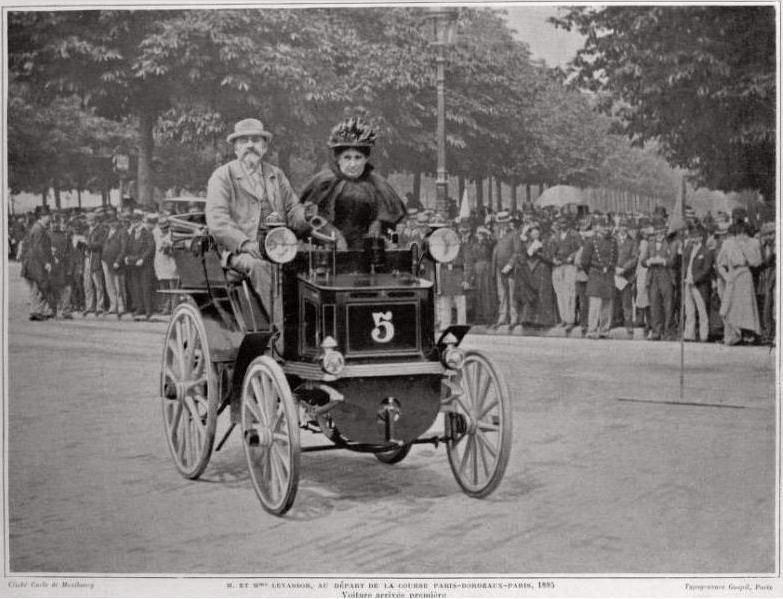
Early reports placed the young French steam and petrol pioneers in changing positions as the field moved south. De Dion was initially very fast, but mechanical failure near the Loire ended his challenge. Levassor then inherited an advantage and pressed on through Tours and Poitiers while other cars lost time to defects, heat, dust and repairs.
At Tours, shortly before nine in the evening according to the narrative chronology, Levassor was firmly among the leaders; by Poitiers he was pressing ahead after midnight. The image of the automobile leaving the city’s festive crowds behind and advancing through unlit countryside belongs to the essence of the event. The crew had to watch the road, attend to the engine, judge their rate of travel and improvise repairs without the equipment that later generations would expect at every service stop.
Bordeaux: a sandwich, champagne and almost no rest
Levassor arrived at the Bordeaux turning point in the morning of 12 June. A clock time of approximately 10:32 a.m. is reported in contemporary coverage; it must not be misread as a journey time of ten hours and thirty-two minutes. Since the timed departure had taken place around noon on the previous day, the outward run had consumed roughly twenty-two and a half hours.
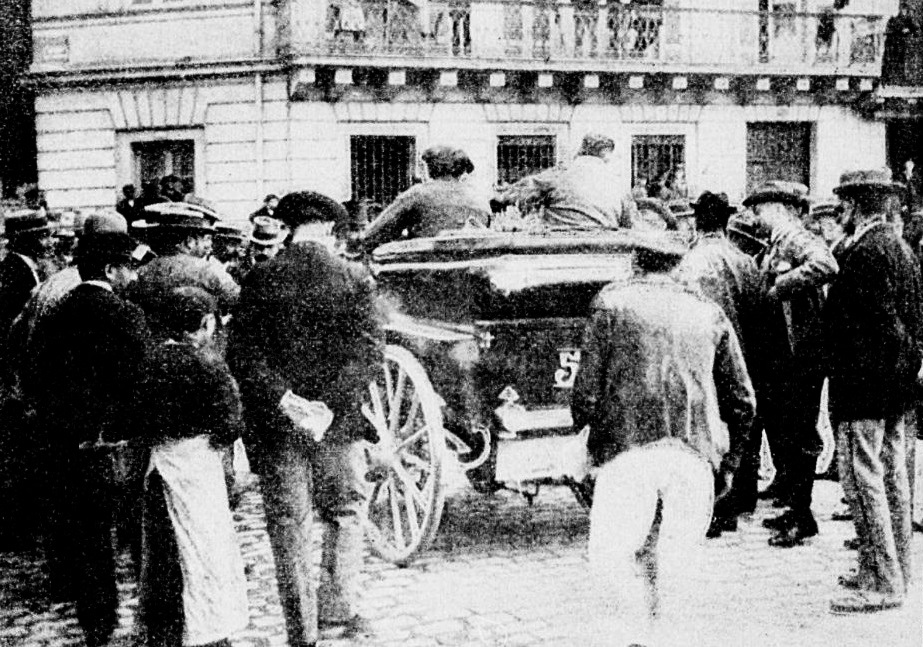
At the control, Levassor paused only briefly. The familiar story of a sandwich and a glass of champagne captures the atmosphere of this astonishing event. Charles d’Hostingue, his travelling mechanic and companion, attended to lubrication, fuel, water and the car’s running condition. Drivers had neither the protection of modern windscreens nor the comfort of modern suspension; dust was omnipresent, and the violence transmitted by the wheels exhausted both man and machinery.
Particularly striking is the refusal, recorded in biographical accounts, to hand the wheel to a relief driver. Levassor knew the response of his engine and transmission and preferred to nurse the machine himself. The decision made the uninterrupted journey into a formidable human test. It also exposed him to the dangers of prolonged fatigue—dangers that would be familiar to any modern driver even on far better roads.
The journey became a trial of vigilance as much as engineering. According to later narrative accounts, Levassor refused repeated opportunities to surrender the controls. Exhaustion eventually caused him to doze off; a roadside mishap bent a mudguard and damaged a lamp but did not end his run. The same accounts describe repairs to the ignition mechanism and repeated efforts by d’Hostingue to keep the driver awake.
Return to Paris: first across the line
At about 12:57 p.m. on 13 June 1895, no. 5 reached Paris. La Locomotion Automobile recorded an elapsed time of 48 hours 47 minutes; other accounts round this to 48 hours 48 minutes. Over a distance approaching 1,190 km, Levassor had maintained an average close to 24 km/h, stops included. That pace, over atrocious roads and without relief, was astonishing for 1895.
The nearest rival did not arrive until several hours later. That interval was far more important to the spectators than the technical distinction between an elapsed time of 48 hours 47 minutes and a figure rounded to the next minute. Levassor had crossed France, reached the control at Bordeaux and returned without the long rest that many had assumed necessary. The fact of first arrival was beyond dispute, even though the rules would determine the principal cash prize differently.
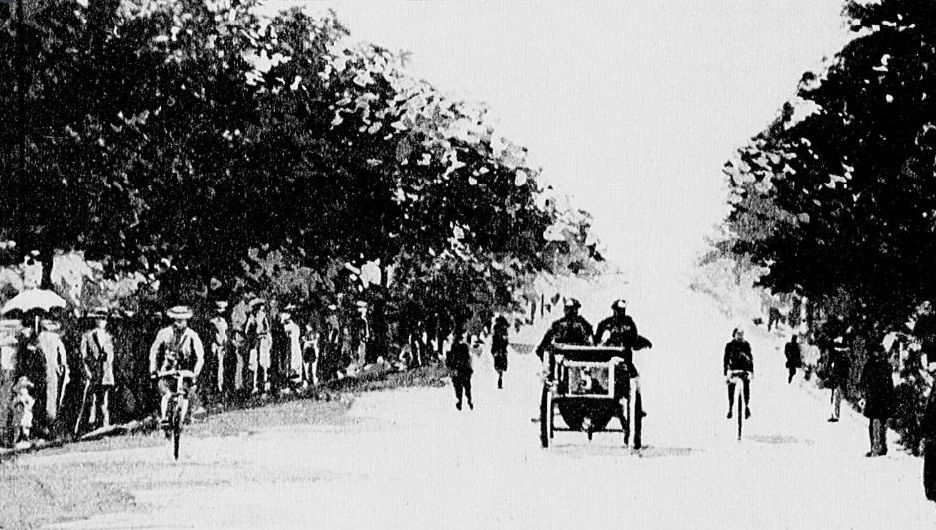
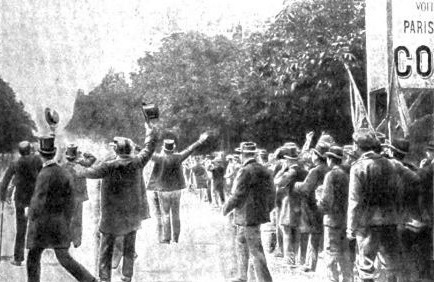
Contemporary observers emphasised not reckless top speed but regularity. Levassor had kept the engine running within what he considered its safe limits and avoided needless strain. His performance demonstrated the value of a comparatively light vehicle, a mechanically sound powertrain and a driver able to interpret every change in the machine’s behaviour.
The Peugeot paradox: who really won?
The documentary record leaves little room for the frequently repeated phrase that the Peugeot receiving the main prize “finished second”. It did not. The second automobile to reach Paris was Peugeot no. 15, a two-seat car, which was itself ineligible for the principal four-seat award.
The Peugeot no. 8, a four-seat vis-à-vis, crossed the line third; Peugeot no. 16, a four-seat phaeton associated with Koechlin, arrived fourth. Because no. 16 had started later, however, its measured journey was about a minute shorter than that of no. 8. The contemporary lists give 59 h 49 min for no. 8 and 59 h 48 min for no. 16; minor rounding differences occur between sources.
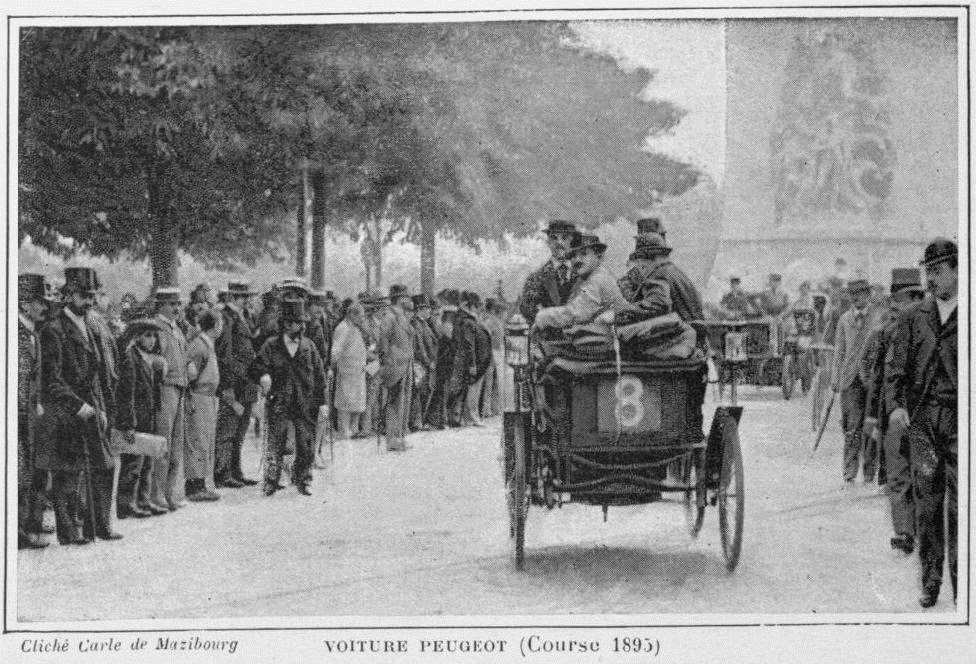
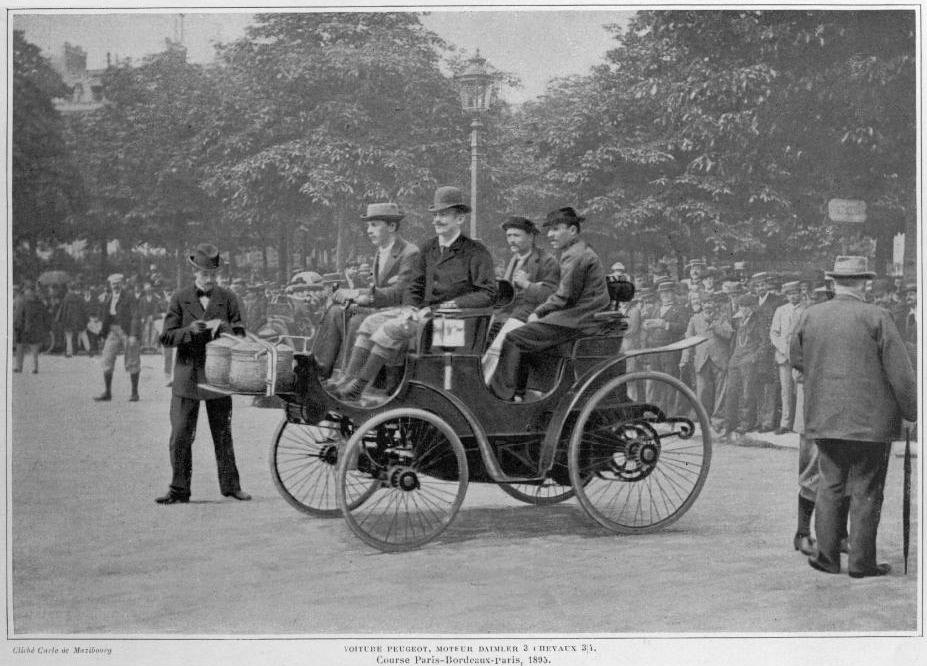
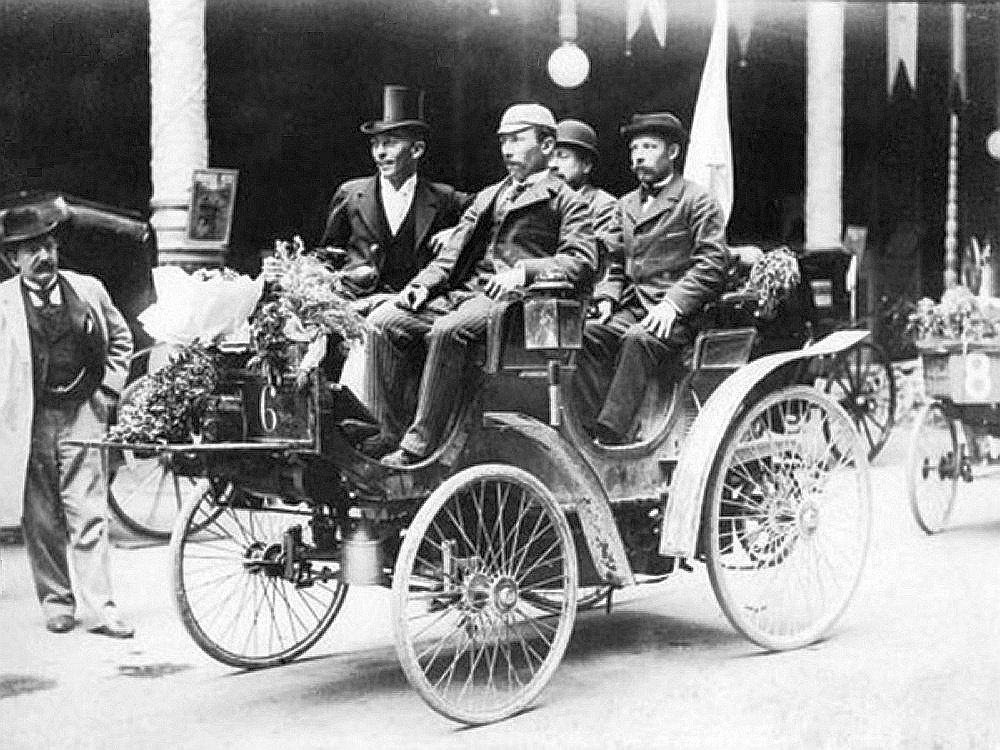
The official first prize of 30,000 francs therefore went to Peugeot no. 16, while Panhard & Levassor no. 5 received the second prize of 12,000 francs. Some secondary accounts quote amounts including subscriptions or supplementary awards; for clarity, the figures below follow the principal contemporary prize list printed in July 1895.
| Arrival | No. | Car | Elapsed time | Prize in contemporary list |
|---|---|---|---|---|
| 1 | 5 | Panhard & Levassor, two seats | 48 h 47 min | Second prize, 12,000 F |
| 2 | 15 | Peugeot, two seats | 54 h 35 min | Third prize, 6,000 F |
| 3 | 8 | Peugeot, four seats | 59 h 49 min | Fourth prize, 3,000 F |
| 4 | 16 | Peugeot, four seats | 59 h 48 min | First prize, 30,000 F |
| 5 | 12 | Roger / Benz, four seats | 64 h 30 min | Fifth prize, 3,000 F |
| 6 | 7 | Panhard & Levassor, four seats | 72 h 14 min | Sixth prize, 3,000 F |
| 7 | 28 | Panhard & Levassor, five seats | 78 h 07 min | Seventh prize, 3,000 F |
| 8 | 13 | Roger / Benz, four seats | 82 h 48 min | Supplementary, 1,500 F |
| 9 | 24 | Amédée Bollée, steam omnibus | 90 h 03 min | Supplementary, 1,500 F |
Source: La Locomotion Automobile, July 1895, pp. 148–149. This is the recorded order of arrival, not a ranking sorted strictly by elapsed time. For nos. 8 and 16, the order by elapsed time is reversed.
Other stories hidden in the classification
The official nine finishers tell only part of the story. Panhard & Levassor no. 6 reached the Bordeaux turning point but was disqualified for changing wheels during the race, according to the technical note accompanying the graph published in La Nature. This illustrates how an apparently sensible roadside repair could conflict with the competition’s rules.
The remaining classified Panhards tell their own story. No. 7 completed the journey in 72 hours 14 minutes, and the larger no. 28 followed in 78 hours 7 minutes. Two Roger-entered Benz cars also qualified, showing that the field was not simply a contest between Panhard and Peugeot. The last classified car was Bollée’s veteran steam omnibus, whose 90-hour run was an immense feat of workshop improvisation, even though it was much slower than the leading petrol machines.
Other cars merit attention: the petrol-powered Gautier, the Benz entered under Roger’s name, and the ambitious electric Jeantaud reflect an industry that had not yet converged on a single mechanical recipe. Each image of a competitor is evidence of another branch of development, even when that entrant failed to reach Paris.
Michelin’s L’Éclair: a valuable result beyond the official classification
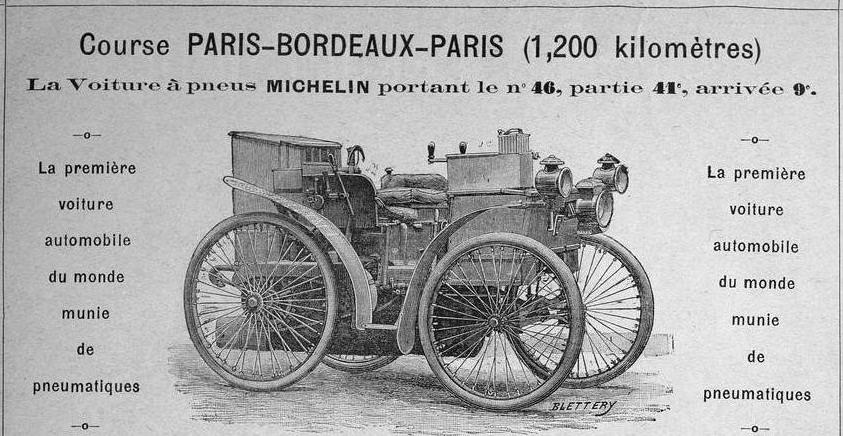
One of the most instructive experiments in the entire contest was undertaken by André and Édouard Michelin. Their entry, no. 46, was a Peugeot-based automobile fitted with detachable pneumatic tyres. The car became known as L’Éclair (“the lightning flash”), a name later explained by its irregular, zigzag course along the road. This was a provocative experiment at a time when many engineers doubted that air-filled tyres could bear the weight and stresses of a motor vehicle.
Repeated tyre and wheel difficulties delayed the Michelin crew. Contemporary publicity nevertheless presented the journey as proof that pneumatic tyres could be made to work on an automobile. The advertising image reproduced here declares that no. 46 arrived ninth; however, the officially published list of the nine finishers inside the prescribed 100 hours does not include Michelin’s car. These statements are compatible only if the distinction between an eventual arrival and official classification is preserved. Later accounts indicate that the car finished outside the time limit.
Its immediate competitive result was modest, but its technical and commercial significance was substantial. Pneumatic tyres offered a means of reducing the destructive shocks transmitted by poor roads to both passenger and machinery; improving them would become as important to the automobile’s development as improving the engine itself.
The lessons: why 1895 mattered
The race did not prove that petrol engines would always surpass steam and electricity in every application. It did establish that, with the components available in 1895, a relatively light petrol automobile could deliver an extraordinary combination of speed, range, repairability and endurance. Daimler-pattern engines, adapted by French manufacturers, dominated the leading finishers. The event also demonstrated the practical importance of reducing unnecessary mass and protecting the transmission from the road.
For Panhard & Levassor, Levassor’s finishing performance offered something advertisements alone could not provide: a vivid public demonstration of the firm’s engineering. For Peugeot, no. 16’s first prize was equally important evidence that a genuine four-seat family motorcar could endure a 100-hour challenge. And for Michelin, the imperfect run of no. 46 supplied an early laboratory for the pneumatic tyre that would soon transform road travel.
As a contemporary writer in La Locomotion Automobile put it in substance, the decisive quality was not reckless maximum speed but intelligence in handling the machine. The same discussion stressed the central importance of lightness. Large steam systems carried boilers, water and fuel; battery-electric machines carried heavy accumulators; the best-performing petrol cars were comparatively light and able to replenish their fuel quickly. The scientific comparison was not universal—future technologies could evolve—but for this particular event the outcome was unmistakable.
The trial’s significance also lies in the individuals who bore the risk. Levassor’s achievement has often been described as a victory of willpower. Yet it was inseparable from years of work on engines, gearboxes, carburetion and the physical layout of the automobile. Paris–Bordeaux–Paris was not a single inventor’s triumph but a public experiment involving competing technologies and an emerging industrial network.
Sources and further reading
- La Locomotion Automobile, 1895 (CNAM/Cnum digitisation), especially regulations p. 125, July results pp. 148–149, official itinerary and article on Jeantaud.
- L. Baudry de Saunier, “Après la course,” La Locomotion Automobile, July 1895, with official classification.
- “The Paris-Bordeaux-Paris Race of Automobile Carriages,” Scientific American Supplement, 10 August 1895, no. 1023, reproducing contemporary illustrations and a course graph.
- La Nature, technical report and race chart, June 1895 (including the note about Panhard no. 6).
- Official itinerary, four route plates, La Locomotion Automobile, February–May 1895.
- Musée Carnavalet, Galerie Rapp exhibition poster (E. Clouet, 1895, inventory AFF1656).
- Les Koechlin et l’automobile, family bulletin no. 5, December 1980, pp. 3–4.
- Vladimir Vershinin, Panhard & Levassor Brass Era, section “Paris–Bordeaux–Paris Race (1895),” pp. 101–104. Additional 1895 documents cited above have been consulted for the present article.
Historical note: Figures for race distance and some reported timings vary slightly across contemporary publications; all finish positions, times and prizes in the table above follow the July 1895 official list, reproduced in La Locomotion Automobile. Archival image captions describe the original labelled subjects and do not necessarily establish every identification beyond doubt.
© Vladimir Vershinin, BrassCarEra.com. Historical illustrations remain subject to the rights and attribution indicated in their original source records.